Leveraging DevOps for SAP S/4HANA: Opportunities and Considerations

As organizations migrate to SAP S/4HANA, they face increasing challenges in ensuring that their IT systems remain agile and efficient. With over 69% of companies aiming to complete their SAP S/4HANA migration by 2027, a clear focus has emerged on optimizing operations to avoid system downtime and increase productivity.
The adoption of DevOps practices has proven to be instrumental in managing the complexities of SAP S/4HANA deployments, offering opportunities to automate workflows, enhance collaboration, and streamline continuous delivery pipelines. However, there are significant considerations, particularly around aligning DevOps strategies with the rigid structure of SAP environments, that need addressing to fully leverage these benefits.
This blog explores the opportunities DevOps presents for SAP S/4HANA, and the factors businesses should consider when integrating these practices to ensure a smooth and successful implementation.
Opportunities for DevOps in SAP S/4HANA Implementations
1. Automation of Manual Processes
A key advantage of implementing DevOps in SAP S/4HANA is automation, particularly in deployment and testing. DevOps enables automated workflows, which accelerate releases and reduce the manual effort traditionally involved in system updates and migrations. With SAP environments being highly structured, automation minimizes the chance of errors that could impact critical business processes. In doing so, it significantly reduces the time required for code deployment, quality checks, and system integration tests.
2. Cross-Functional Collaboration
DevOps practices encourage collaboration between development, operations, and quality assurance teams. For SAP S/4HANA, this cross-functional collaboration allows for faster problem-solving and innovation, driving improvements in both IT and business processes. Given SAP’s extensive suite of tools and modules, teams working in silos can struggle with integrating new updates or resolving system issues. DevOps breaks these barriers by ensuring continuous communication and shared accountability across teams.
3. Continuous Integration and Continuous Deployment (CI/CD)
The CI/CD pipeline is at the heart of DevOps, offering seamless integration of code changes and automated deployment. With SAP S/4HANA, where frequent updates and customizations are required, the CI/CD model ensures that changes are integrated without disrupting business processes. SAP’s core stability combined with DevOps’ flexibility can create an efficient, automated system that handles rapid deployments and keeps pace with innovation without risking downtime.
4. Improving SAP Landscape Management
Managing an SAP landscape is often a complex task due to the number of customizations and configurations needed. DevOps helps improve landscape management by automating environment setups, backups, and monitoring. This automation reduces the overhead for IT teams and ensures environments are always in sync, which is crucial during large migrations or system updates.
5. Enhanced Monitoring and Feedback Loops
One of the pillars of DevOps is the ability to establish continuous feedback loops. This is crucial for SAP S/4HANA environments, where downtime or system failures can be costly. Using DevOps tools for real-time monitoring and analytics provides insights into system performance, security vulnerabilities, and user experience, allowing IT teams to respond proactively rather than reactively.
Key Considerations for Leveraging DevOps in SAP S/4HANA

While there are clear opportunities to integrate DevOps with SAP S/4HANA, certain considerations must be addressed to fully capitalize on the benefits.
1. Cultural Shift Within Teams
The success of DevOps hinges on a cultural shift that promotes collaboration and continuous improvement across the organization. However, SAP teams often work in traditional, siloed environments. Transitioning to a DevOps framework will require not only new tools but also a change in mindset. Teams must embrace agile methodologies and iterative development cycles to align with DevOps practices effectively.
2. Balancing Speed and Stability
SAP S/4HANA is typically implemented in large, enterprise environments where system stability is paramount. One of the challenges of applying DevOps to SAP is finding the balance between rapid deployment and maintaining the stability required in mission-critical environments. It’s essential to adopt a DevOps strategy that doesn’t compromise the quality or integrity of the SAP system, especially during upgrades or large-scale migrations.
3. Tooling and Integration
SAP S/4HANA environments rely on a wide range of third-party tools for testing, deployment, and monitoring. To implement a successful DevOps strategy, organizations need to ensure that the tools they use integrate seamlessly with SAP modules. While SAP Solution Manager provides some DevOps functionalities, businesses may need to invest in additional tools that support full CI/CD pipelines and integrate with existing systems.
4. Security and Compliance
Security is a critical aspect of any SAP environment, especially given the sensitive data that enterprises manage. DevOps can introduce security vulnerabilities if not properly managed. Integrating security into the DevOps pipeline (DevSecOps) is vital for ensuring that SAP S/4HANA remains secure throughout the development lifecycle. Organizations must prioritize secure coding practices, automated security testing, and regular vulnerability assessments.
DevOps Opportunities for SAP S/4HANA: Best Practices
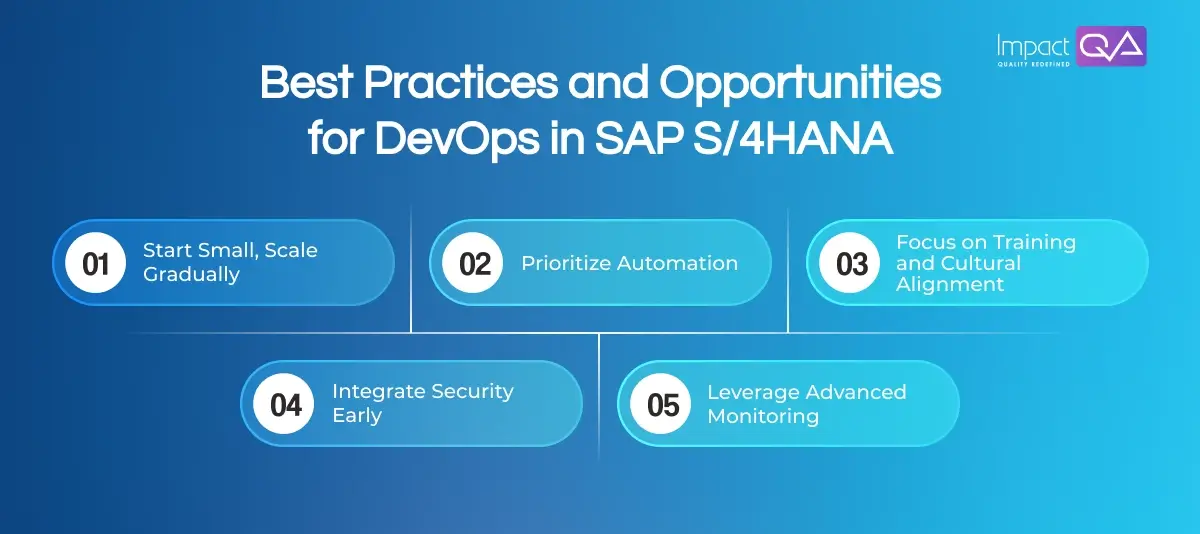
- Start Small, Scale Gradually: Rather than deploying DevOps across the entire SAP ecosystem in one go, it’s advisable to start with a specific project or module. This helps teams identify the right tools and processes and address any gaps before scaling DevOps practices organization-wide.
- Prioritize Automation: Automate as many processes as possible, especially in testing, deployment, and monitoring. This ensures that updates are rolled out smoothly, minimizing the risk of human error.
- Focus on Training and Cultural Alignment: Success with DevOps in SAP S/4HANA requires proper training. Teams need to understand the principles of DevOps and how they can be applied within the SAP framework. Encourage a culture of continuous learning and improvement.
- Integrate Security Early: Implement security checks from the start of the development process. Automated security tools should be part of the CI/CD pipeline to prevent vulnerabilities from entering production environments.
- Leverage Advanced Monitoring: Use real-time monitoring tools to track system performance, application behavior, and security issues. Advanced monitoring helps preemptively address system failures or bottlenecks before they escalate.
Conclusion
As organizations continue to embrace SAP S/4HANA, the integration of DevOps is key to maintaining agility, boosting productivity, and minimizing risks. While the benefits are immense, organizations must adopt DevOps thoughtfully, considering cultural shifts, security, and tool integration. The journey to fully leveraging DevOps in SAP S/4HANA requires not only technical adaptation but also a strategic approach.
ImpactQA, with its deep expertise in SAP systems and DevOps methodologies, is uniquely positioned to assist businesses in this transformation. By offering tailored DevOps solutions, advanced automation frameworks, and comprehensive security strategies, ImpactQA ensures seamless SAP S/4HANA implementations. Our experts help streamline operations and elevate performance through continuous monitoring and proactive testing.
FAQs
Share this post


Related Posts
Our Case Studies