
AI-Led Quality Engineering Services for Intelligent Software Assurance
We apply advanced AI models, autonomous systems, and predictive quality analytics to modernize quality engineering and deliver risk-aware assurance across complex digital ecosystems.
Your Trusted Partner for AI-Led Quality Engineering
ImpactQA enables enterprises to achieve faster, more predictable software releases through AI-led quality engineering that combines intelligent test strategy, autonomous execution, and data-driven quality analytics embedded directly into SDLC and DevOps pipelines. Our approach extends proven industry practices with real-world agentic AI capabilities in quality engineering through enhanced test coverage, automation stability, and release predictability across complex application ecosystems.
By modernizing traditional QA into scalable, AI-driven quality engineering, we help organizations adopt autonomous testing practices and accelerate AI-based automation testing across continuous development workflows. This results in reduced regression effort, shorter release cycles, and sustained quality assurance across cloud-native, API-driven, mobile, and microservices-based architectures.
Business Impact at a Glance

Accelerated Automation
Up to 45% faster test creation using AI-driven modeling and AI-based test automation acceleration
Higher Coverage
Up to 60% improvement in functional and regression coverage through intelligent test prioritization
Reduced Defects
35% reduction in production incidents enabled by predictive quality analytics
Enterprise Ready
Scalable AI-led delivery models supporting cloud-native and legacy ecosystems
Certified Specialists
Cross-functional AI, DevOps, and QA professionals with deep domain expertiseWhy AI-Led Quality Engineering Is Critical for Modern Software Delivery
Modern software systems evolve faster than traditional validation models can adapt. With rising architectural complexity and continuous releases, quality must shift from periodic testing to an intelligent, system-wide engineering capability embedded across delivery pipelines.
Managing Architectural Complexity
AI-led quality engineering validates microservices, APIs, cloud platforms, and third-party integrations by dynamically mapping dependencies and identifying quality impacts across interconnected components.
Handling Continuous Change
Frequent UI updates, feature toggles, and infrastructure changes demand adaptive testing systems that automatically adjust validation logic without constant human intervention or full script rewrites.
Supporting Data-Driven Applications
AI enables effective testing of applications driven by large, volatile datasets, personalization engines, and rule-based workflows by generating realistic scenarios and monitoring data integrity across environments.
Reducing Late-Stage Release Risk
Predictive quality signals help teams detect instability patterns earlier in development cycles, reducing reliance on last-minute regression testing and minimizing surprise failures near production cutovers.
Enabling Sustainable Automation Growth
AI-based automation testing allows organizations to scale automation programs without proportional increases in maintenance workload, tooling complexity, or fragile test dependencies.
Validating Real-World System Behavior
AI in performance engineering evaluates behavioral patterns under variable traffic conditions, infrastructure constraints, and usage anomalies to ensure production readiness beyond synthetic test environments.
Our AI-Driven Quality Engineering Process & Capabilities Mapping
This mapping demonstrates how AI-Led Quality Engineering, AI in Performance, and Autonomous Testing address the complete Software Testing Life Cycle (STLC) while integrating seamlessly with existing enterprise technology stacks and DevOps ecosystems.

Core Disciplines of Our AI-Led Quality Engineering Services
AI Test Strategy & Consulting
We design enterprise-grade AI-led quality engineering roadmaps encompassing data readiness, tooling architecture, governance, security, operating models, and long-term platform scalability planning. Our consulting approach aligns business risk, compliance requirements, and system complexity with measurable quality engineering objectives and release assurance goals.
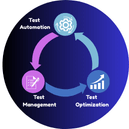
Intelligent Test Optimization
Our intelligent test optimization applies AI-led quality engineering to eliminate redundant tests, focus on business-critical paths, and prioritize testing based on risk and impact. This intelligent software assurance approach reduces test cycles and enables faster, high-confidence releases across complex enterprise systems and continuous delivery environments globally.
AI-Based Test Automation Acceleration
Our AI-based test automation helps organizations scale automated testing by simplifying script creation and improving resilience to UI and code changes. By leveraging modern LLM-based copilots and intelligent automation techniques, we expand automation coverage while minimizing maintenance effort and avoiding long-term technical debt.

AI Observability & Predictive Quality Analytics
We correlate logs, test results, infrastructure metrics, and user behavior to identify quality risks early. Predictive dashboards forecast defect probability, performance degradation, and release readiness using advanced analytics. This enables proactive decisions, improves operational stability, and reduces production issues.
Autonomous Testing & Continuous Quality Bots
Our autonomous testing & continuous quality bots continuously monitor code, configuration, and environment changes to intelligently trigger tests and validate quality across CI/CD pipelines. Designed for modern DevOps-driven enterprises, these bots enable early defect detection, reduce manual intervention, and maintain consistent release quality at scale.
AI in Performance & Reliability Engineering
AI-driven techniques analyze system behavior, load patterns, and runtime metrics to predict performance bottlenecks and reliability risks before they impact users. By enabling proactive capacity planning, resilience validation, and early issue detection, this approach helps ensure stable, high-performing applications under real-world conditions.
Why Choose ImpactQA for AI-Led Quality Engineering
Intelligence-First Quality Engineering
AI embedded across test design, execution, analytics, and data layers, creating self-improving quality systems that continuously adapt to evolving applications, modern architectures, cloud-native environments, and complex delivery pipelines supporting rapid releases and resilience.
Predictive Quality Control
AI-driven predictive analytics correlate test results, production telemetry, and user behavior to forecast defects, performance risks, potential outages, capacity issues, and release readiness with greater accuracy, reliability, and decision-making clarity for stakeholders organization-wide.
Scalable Autonomous Quality Models
Autonomous testing platforms scale across products, technologies, and teams while preserving governance, auditability, security controls, regulatory compliance, data privacy, risk management, standardized reporting, and consistent quality benchmarks across global enterprises.
Reduced Automation Fragility
Self-healing scripts, model-based test design, and adaptive locators minimize automation failures, maintenance effort, technical debt, operational overhead, flaky executions, and long-term automation instability over time across enterprise applications and platforms globally.
When to Adopt AI-Led Quality Engineering

Large Enterprise Applications
AI-powered test prioritization and AI-based automation testing stabilize releases across ERP, CRM, and trading platforms with complex integration landscapes
Continuous Delivery & DevOps Environments
Autonomous testing enables rapid, continuous validation within CI/CD pipelines without blocking deployments or overloading quality engineering.

Performance-Sensitive Systems
High-concurrency and performance-critical platforms benefit from AI-driven performance testing, behavioral modeling, and predictive reliability engineering.

Data-Driven & Highly Dynamic Applications
Data-driven applications with dynamic content, personalization, and frequent data changes require adaptive validation supported by agentic AI–driven quality engineering frameworks.
Why ImpactQA Stands Out
AI-Native Quality Engineering Teams
Certified engineers specializing in AI-led quality engineering, autonomous testing, enterprise-scale automation, data engineering, and complex system validation across scale programs.
Autonomous Testing Expertise
Proven delivery of autonomous software testing tools enabling continuous validation, intelligent failure analysis, self-optimization, and stable CI/CD pipeline integration.
AI-Driven Performance Engineering Leadership
Advanced AI performance engineering combining traffic modeling, generative workloads, capacity forecasting, and predictive reliability analysis for mission-critical platforms.
Flexible Engagement Models
On-demand managed and enterprise delivery models supporting rapid scaling, cost transparency, domain alignment, and long-term quality transformation initiatives.
Domain-Driven AI Quality Engineering Solutions
Industry-aligned AI-led testing solutions addressing regulatory complexity, data sensitivity, integration risk, performance constraints, and domain-specific compliance requirements globally.
Global Delivery Scale
Distributed AI-enabled QA teams operating across regions, time zones, and regulatory environments, supporting continuous enterprise software delivery and modernization programs.
Upgrade your software quality with ImpactQA’s AI-Led Quality Engineering services. Deploy autonomous testing, predictive analytics, and intelligent automation to release faster and at scale
Our Key Clients









Explore Opportunities to Deploy Best Digital Solutions!
700+ projects delivered and deployed successfully
Top 1% talented engineers with 10+ years of experience
14+ years of services helping clients to nurture & grow
98% customer satisfaction rate from the global clients
Helping Global Leaders with Quality Engineering
Transform Enterprise Operations with Performance-Driven Automation
ImpactQA’s software testing services, including AI-led automation, deliver measurable business outcomes. Book your 1:1 session today to turn challenges into a winning digital transformation strategy.