DevSecOps vs CI/CD: Which Approach Delivers Better Security in Modern Software Development?

Quick Summary:
With the software world so deeply engaged in increasing complexities, security remains a prime concern. This blog compares DevSecOps and CI/CD, two approaches that aim to refactor the development lifecycle. It examines which methodology offers better security practices and outlines key differences between them to help organizations choose the most effective approach to protect their software and data.
Table of Contents
- What is DevSecOps? A Closer Look at the Integration of Security
- Understanding the Continuous Integration/Continuous Delivery Pipeline
- DevSecOps vs CI/CD: A Comparison of Security Practices
- The Role of Automation in Enhancing Security with DevSecOps and CI/CD
- The Future of Security in DevSecOps and CI/CD
- Which Approach Delivers Better Security? Insights and Considerations
- Conclusion
As cyberattacks grow in frequency and complexity, software development teams face mounting pressure to build secure applications quickly. Nowadays, it’s not enough to focus solely on speed or functionality. Security must be integrated into the development process from the start. This is where two prominent approaches i.e., DevSecOps and CI/CD, come into play. DevSecOps embeds security practices throughout the development lifecycle to ensure vulnerabilities are addressed early. On the other hand, CI/CD focuses on automating integration and delivery, with security often added as a secondary concern.
Choosing the best approach for your organization is about finding the right balance between speed and security. In this blog, we take a closer look at both methodologies, evaluating their security practices and helping you determine which one is most suited to protecting your software and data in an agile environment.
What is DevSecOps? A Closer Look at the Integration of Security
DevSecOps is an extension of DevOps that includes a proactive approach to security. In DevSecOps, security is not a separate or final step; rather, it is a core part of the development process from the start. Security is integrated into every phase of the software development lifecycle (SDLC) to ensure that any vulnerabilities are caught early and addressed before deployment.
Key Features of DevSecOps:

- Shift-left Security: This concept involves bringing security considerations to the very beginning of the development lifecycle. It reduces the risk of vulnerabilities making it to production by allowing developers to address security issues as they arise.
- Automated Security Tools: DevSecOps relies heavily on automation to perform security testing during development and deployment. Tools like SAST (Static Application Security Testing) and DAST (Dynamic Application Security Testing) are incorporated into the pipeline to scan for vulnerabilities at different stages.
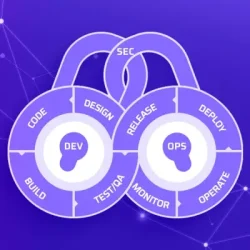
- Continuous Monitoring: Security is not just about finding bugs early; it’s also about continuous monitoring of applications after they’ve been deployed to identify any emerging threats.
- Collaboration Between Teams: DevSecOps encourages greater collaboration between development, security, and operations teams to ensure that everyone is on the same page when it comes to identifying and managing security risks.
Understanding the Continuous Integration/Continuous Delivery Pipeline
CI/CD is a set of practices designed to automate the stages of software development and delivery. It aims to streamline the process of building, testing, and deploying applications. The primary goal is to enable faster and more reliable software releases so that the code is constantly in a deployable form.
Key Features of CI/CD:
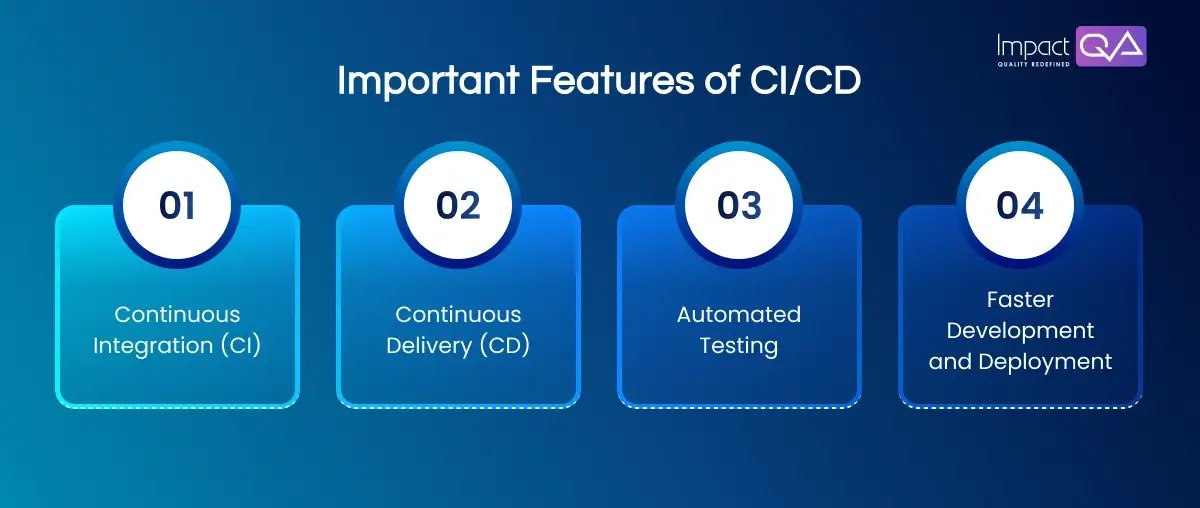
- Continuous Integration (CI): This refers to the practice of merging all developers’ code into a shared repository multiple times a day. Automated tests run to catch issues early so that bugs don’t pile up and cause problems later.
- Continuous Delivery (CD): CD takes the process a step further by automating the release of code to production. Once the code passes automated tests, it can be deployed to production with minimal human intervention.
- Automated Testing: One of the key components of CI/CD is automated testing. Automated tests are run after every change to ensure that new code doesn’t introduce bugs into the application.
- Faster Development and Deployment: By automating most of the manual processes in software development, CI/CD allows teams to deploy code faster and more frequently, reducing the time between writing code and releasing it to users.
While CI/CD is fantastic for accelerating development cycles, security often gets sidelined at this rapid pace. As we’ll explore later, this can be a significant disadvantage when security is not integrated into the pipeline.

DevSecOps vs CI/CD: A Comparison of Security Practices
When comparing DevSecOps vs CI/CD, it’s clear that both practices can deliver benefits in terms of improving development workflows and delivering software faster. However, the way they approach security differs fundamentally.
Security in DevSecOps:
- Security is a priority at every step, from development to deployment.
- Tools are integrated into the workflow to continuously monitor and test for vulnerabilities.
- Security specialists work alongside developers, ensuring the application remains secure as it evolves.
- Risks are minimized early in the process, reducing the likelihood of severe vulnerabilities in production.
Security in CI/CD:
- While CI/CD offers automated testing, it primarily focuses on code quality and performance. Security testing often comes as an afterthought.
- Security tools may be integrated into the CI/CD pipeline, but they are often not as deeply embedded or comprehensive as in DevSecOps.
- Security might be addressed at the end of the pipeline, after deployment, rather than being embedded from the beginning.
Learn how DevSecOps can proactively address vulnerabilities from the start.
Key Differences:
- Approach to Security: DevSecOps integrates security from the outset, while CI/CD tends to treat security as a secondary concern, focused mostly on testing after code is integrated and delivered.
- Speed vs. Security: CI/CD is all about speed – pushing code to production quickly. DevSecOps, on the other hand, focuses on ensuring that speed does not come at the expense of security.
- Automation: Both DevSecOps and CI/CD benefit from automation. However, DevSecOps uses it for proactive security checks, while CI/CD uses it to test code quality and ensure successful deployment.
In the debate of DevSecOps vs CI/CD, DevSecOps takes the upper hand for organizations that prioritize security above all else. However, if speed is the primary goal, CI/CD can be enhanced with added security measures, but it may require additional tools and expertise.
The Role of Automation in Enhancing Security with DevSecOps and CI/CD
Automation plays a pivotal role in both DevSecOps and CI/CD, driving efficiency, speed, and consistency in software development. However, when it comes to security, automation is especially crucial in addressing vulnerabilities before they become significant threats. In this section, we’ll explore how automation benefits security within these two approaches and the unique challenges each faces.
Automation in DevSecOps: A Layered Defense
In DevSecOps, automation is integrated across all stages of the software development lifecycle, with a primary focus on early detection and prevention of security vulnerabilities. By automating security practices, organizations can ensure that security checks are continuously performed without slowing down the development process.
Here’s how automation plays a key role in DevSecOps:

1. Automated Security Testing: DevSecOps teams often employ tools such as SAST (Static Application Security Testing) and DAST (Dynamic Application Security Testing) within the CI/CD pipeline. SAST tools scan the source code for vulnerabilities without executing the program to help developers catch issues early.
DAST, on the other hand, tests the application during runtime, uncovering vulnerabilities related to the application’s behavior in real time. Automating these processes ensures that security is never neglected, regardless of how frequently new code is deployed.
2. Infrastructure as Code (IaC): With the adoption of cloud-native applications and infrastructure automation tools like Terraform, DevSecOps teams automate infrastructure management and security. IaC tools allow security policies to be integrated into the code that provisions cloud resources so that security standards are maintained consistently across environments.
3. Automated Patch Management: As vulnerabilities are discovered, patching systems quickly is essential. In a DevSecOps environment, automated patch management ensures that updates are seamlessly integrated and tested as part of the workflow. Security vulnerabilities are less likely to persist because of the automated application of patches, reducing potential attack surfaces.
4. Continuous Monitoring and Incident Response: Automation also extends to security monitoring and incident response. Tools like Security Information and Event Management (SIEM) can automatically identify anomalous activity and trigger responses, such as isolating affected systems or alerting security teams. This ongoing vigilance ensures that potential threats are quickly detected and mitigated to reduce the time between exposure and resolution.
Automation in CI/CD: Integrating Security without Sacrificing Speed
While CI/CD emphasizes speed, automation in CI/CD pipelines primarily focuses on improving code quality and reducing manual intervention during the build, test, and deployment stages. When security is added to a CI/CD pipeline, it requires thoughtful integration of automated security checks without disrupting the primary goal of continuous delivery.
Here’s how CI/CD can automate security testing and practices:
1. Automated Security Testing in the Pipeline: In a typical CI/CD pipeline, automated testing is a standard practice, but security testing can be added as an additional layer. Static code analysis tools and vulnerability scanners can be integrated into the CI pipeline to scan for known vulnerabilities or security flaws in the code. Automated penetration testing tools can also be added to the CD pipeline to test the application for security weaknesses once it is deployed to staging or pre-production environments.
2. Security Gates: One way to add security to CI/CD without affecting deployment speed is through security gates. These gates are automated checks that ensure only code that meets certain security standards is allowed to progress through the pipeline. If security vulnerabilities are detected during the CI or CD stages, the pipeline is halted until the issues are resolved. This helps maintain secure software releases while still pushing code quickly through the pipeline.
3. Container Security Automation: With the growing popularity of containerized applications, automating security in container workflows is essential. CI/CD pipelines that leverage containers can automatically scan container images for vulnerabilities and ensure that they meet security best practices before being pushed into production. This helps ensure that containers do not carry outdated or insecure dependencies, which could be exploited by attackers.
4. Automated Compliance Checks: As software development often involves adhering to industry regulations, CI/CD can be leveraged to automate compliance checks as part of the deployment process. For example, automated audits can be built into the pipeline to ensure that code adheres to regulatory frameworks such as GDPR, HIPAA, or PCI-DSS. This reduces the risk of non-compliance, which could lead to legal and financial consequences for the organization.
The Future of Security in DevSecOps and CI/CD
As software development continues to evolve, so do the threats faced by organizations. Both DevSecOps and CI/CD will remain critical aspects of application protection, with the automated integration of security tools becoming increasingly sophisticated. The integration of machine learning and AI will also grow more robust in the future, providing more predictive capabilities for identifying and addressing security vulnerabilities.
For instance, AI-powered security tools are likely to use prevailing patterns in past attacks and code changes to predict forthcoming vulnerabilities. They will, therefore, allow for more proactive countermeasures. As the threat landscape gets more sophisticated, DevSecOps and CI/CD approaches will continue to evolve, with automation providing a strong foundation for effective, scalable, and secure development practices.
In short, automation in both DevSecOps and CI/CD has an important role in increasing security, although the way automation is used varies as a function of the focus in the development approach. DevSecOps emphasizes continuous security at every stage through integrated automation, while CI/CD focuses on fast and frequent deployment, with security often integrated as an additional layer. By understanding the role of automation in each approach, organizations can make informed decisions on how to build secure, scalable, and efficient software delivery pipelines.
Which Approach Delivers Better Security? Insights and Considerations
To determine which approach delivers better security, we must weigh several factors:
- Risk Tolerance: Organizations with high-security needs, such as those handling sensitive data, should prioritize DevSecOps. By addressing security early and continuously, DevSecOps minimizes the risk of vulnerabilities making it into production.
For industries like finance and healthcare, where regulatory compliance and data protection are critical, DevSecOps is the clear choice. - Development Speed: If an organization’s priority is to deliver software quickly and iteratively, CI/CD is the better approach. However, it must be paired with security tools and practices to avoid potential security risks. This might mean adding additional steps or tools to integrate security testing at various stages.
- Cost and Resources: Implementing DevSecOps may require more resources upfront, including training for teams and the adoption of security tools. However, the long-term benefits of reduced risk and faster vulnerability resolution may outweigh these initial costs. CI/CD, by itself, can be faster to implement but may not provide the same level of security.
- Scalability: DevSecOps can be scaled to handle large and complex projects, with security built into the workflow at every stage. CI/CD can be scaled for faster deployment, but security must be manually added to the process, which can be difficult to manage as the system grows.
Find out how CI/CD can integrate security practices effortlessly.
The Bottom Line
As cyber threats continue to evolve, security must become an integral part of the development process. The question of DevSecOps vs CI/CD ultimately boils down to the specific needs of your organization. If security is your top concern, DevSecOps is the way to go. It integrates security at every level, from code development to deployment and beyond. However, if your primary focus is speed, CI/CD can be adapted to include security practices, though it might not provide the same level of protection without extra effort.
Organizations looking to stay ahead in the competitive software development space need to adopt a security-first mindset, which is exactly where ImpactQA can help. With expertise in both DevSecOps and CI/CD, ImpactQA provides comprehensive testing, security, and automation solutions, ensuring that your software is both fast and secure.
With ImpactQA, you will implement the right strategies tailored to your unique requirements, whether speeding up deployment or deeply adaptable security for every stage of development. Our services will reduce your risks and vulnerabilities and ensure compliance to secure your software and quicken your release cycles.
Share this post


Related Posts
Our Case Studies