How the Best CTRM Testing Company Delivers Risk-Free Commodity Trading Operations
Quick Summary:
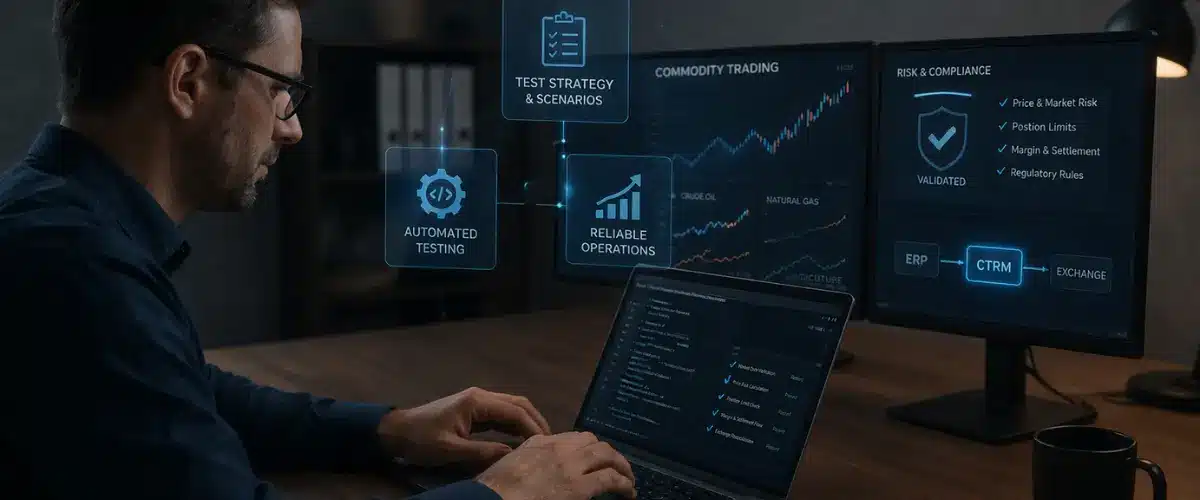
Commodity trading organizations rely on advanced digital platforms to manage contracts, logistics, pricing, and risk exposure. However, the reliability of these platforms depends on disciplined validation. A specialized CTRM testing approach ensures accurate trade capture, financial calculations, and regulatory compliance. This article explains how structured testing practices help the best CTRM testing company deliver stable, transparent, and risk-controlled commodity trading operations across modern enterprise environments.
Table of Contents:
- Introduction
- What is CTRM Software and Its Role in Commodity Trading Operations
- Major Challenges in CTRM Implementation and Testing
- Testing Strategies the Best CTRM Testing Company Uses to Deliver Risk-Free Operations
- Best Practices for Successful CTRM Implementation and Testing
- Final Say
Commodity trading organizations operate in environments where price volatility, regulatory oversight, and complex contractual agreements influence every transaction. Managing these variables manually is not feasible at an enterprise scale. This is why many organizations rely on CTRM software to manage contracts, logistics scheduling, pricing calculations, and risk exposure. These platforms centralize trading operations while supporting accurate financial reporting and compliance monitoring across global commodity markets.
However, deploying commodity trading and risk management (CTRM) software requires more than technical installation. Organizations must verify that pricing models, contract workflows, settlement calculations, and reporting mechanisms function correctly under real trading conditions. This is where structured CTRM implementation and testing become essential. Proper validation ensures that CTRM software solutions operate reliably, enabling trading firms to maintain operational transparency and financial accuracy while managing large trading portfolios.
ImpactQA delivers specialized CTRM testing services that validate trade workflows and system integrations.
What is CTRM Software and Its Role in Commodity Trading Operations
Commodity trading and risk management CTRM software is a specialized enterprise platform used by commodity traders to manage the entire trading lifecycle. It captures trade contracts, monitors price exposure, tracks logistics movements, and supports financial settlement processes. These platforms also help organizations analyze risk exposure, manage hedging strategies, and produce regulatory reports required by global markets.
Many CTRM software companies design platforms that combine trading workflows, logistics data, financial calculations, and risk analytics within a single integrated system. This integration ensures that trading desks, operations teams, risk analysts, and finance departments work with the same verified data.
Core Capabilities of CTRM Platforms
Modern CTRM software solutions typically support several operational functions that drive commodity trading operations.
Trade Capture and Contract Lifecycle Management
- Traders record physical or financial contracts within the system.
- Contract amendments, delivery obligations, and pricing formulas are tracked throughout the lifecycle.
- Testing verifies that contract details and pricing conditions are captured correctly.
Market Data and Pricing Integration
- Commodity prices are pulled from market data providers.
- Pricing formulas calculate mark-to-market values and settlement amounts.
- Validation ensures that pricing indexes and calculations produce accurate trade valuations.
Logistics and Inventory Management
- Commodity movement across pipelines, ships, railways, or storage terminals must align with contract obligations.
- Logistics modules track shipment schedules, delivery points, and storage balances.
Risk Exposure Monitoring
- Risk management teams monitor price exposure and hedge performance using analytical tools.
- Commodity trading and risk management (CTRM) software calculates mark-to-market values and credit exposure.
Financial Settlement and Accounting
- Settlement engines convert trade activity into invoices, payments, and accounting entries.
- Accurate reconciliation between trading operations and financial systems is essential.
Because these platforms manage financial exposure and trading obligations, reliability becomes a critical requirement. Even minor system errors can affect trade valuation, risk reporting, or settlement accuracy.
For this reason, CTRM implementation and testing must confirm that the platform functions correctly across real trading scenarios. Rigorous testing ensures that CTRM software performs reliably while supporting large trade volumes and complex contract structures.
Major Challenges in CTRM Implementation and Testing
Deploying enterprise trading platforms involves significant technical and operational complexity. While CTRM software solutions help streamline commodity trading operations, their implementation often introduces multiple operational risks. From managing complex trade structures to validating integrations with enterprise systems, organizations must address several challenges during CTRM implementation and testing.
1. Complex Trade Structures
Commodity contracts rarely follow simple structures. Many agreements include multiple pricing formulas, delivery conditions, transportation clauses, and settlement mechanisms.
Testing teams must validate numerous combinations of contract parameters to ensure that pricing models and trade valuations remain accurate across different trading scenarios. Any miscalculation in pricing logic can affect portfolio valuation and financial reporting.
2. Integration Across Multiple Enterprise Systems
Most CTRM software companies design trading platforms that integrate with several enterprise applications, including ERP systems, logistics platforms, market data providers, and reporting tools.
Testing must confirm that trade data, pricing feeds, and financial records move correctly between these systems. Incorrect data synchronization can create discrepancies between trading operations, risk reporting, and accounting records.
3. High Data Volume and System Performance
Commodity trading firms process large volumes of trades, pricing updates, and risk calculations throughout the trading day.
Testing teams must ensure that CTRM software maintains stable performance even during periods of increased trading activity. Performance validation helps confirm that trade capture, portfolio valuation, and reporting processes operate efficiently without system slowdowns.
4. Regulatory and Compliance Reporting
Commodity markets operate under strict regulatory frameworks that require transparent reporting of trading activity and financial exposure.
During CTRM implementation and testing, organizations must verify that compliance reports reflect accurate trade data, pricing information, and exposure calculations. Any inconsistencies in regulatory reporting can create compliance risks.
5. Data Migration from Legacy Systems
Many organizations deploy new CTRM software solutions while migrating large volumes of historical trade data from legacy systems.
Testing must confirm that historical trade records, pricing calculations, and counterparty information remain accurate after migration. Any discrepancies in migrated data can affect financial analysis, portfolio reporting, or risk calculations.
Testing Strategies the Best CTRM Testing Company Uses to Deliver Risk-Free Operations
Reliable commodity trading operations depend on disciplined validation practices. The best CTRM testing company follows structured testing methodologies that ensure trading platforms operate correctly across all operational scenarios.
These testing strategies address both technical accuracy and operational reliability.
1. Functional Validation of Trading Workflows
Testing teams validate the complete trade lifecycle to confirm that workflows function correctly.
Key validation areas include:
- Trade capture and contract lifecycle processes
- Pricing formulas and market index mapping
- Logistics scheduling and inventory tracking
- Settlement calculations and invoicing
Specialized CTRM testing services ensure that each stage of the trading process produces accurate outcomes.
2. Integration and Data Flow Testing
Commodity trading platforms rely on data from multiple enterprise systems.
Testing verifies the accuracy of integrations such as:
- Market price feeds
- ERP accounting systems
- Risk analytics tools
- Logistics management platforms
These tests ensure that CTRM software solutions receive accurate data inputs and maintain consistent reporting across systems.
3. Automated Regression Testing
Trading systems frequently undergo configuration updates or market data changes. Manual testing alone cannot manage these repeated validations.
This is where CTRM test automation services play an important role. Automated regression tests validate critical functions repeatedly and ensure that updates do not affect existing workflows.
Automation is commonly used to test:
- Pricing calculations across market scenarios
- Trade lifecycle processing
- Risk exposure reporting
- Settlement workflows
4. Commodity-Specific Scenario Testing
Commodity markets experience constant price fluctuations and operational disruptions. Testing strategies must simulate realistic market scenarios.
Examples include:
- Price volatility conditions
- Delivery delays or transport disruptions
- Contract amendments and renegotiations
- Inventory fluctuations across storage locations
Organizations implementing right-angle CTRM software solutions often require detailed scenario testing because energy trading workflows involve complex pricing structures and logistics coordination.
5. Performance and Scalability Testing
Commodity trading platforms must process large trade volumes and generate analytical reports quickly.
Testing ensures that:
- Trade processing remains stable during peak trading hours
- Portfolio valuations are generated quickly
- System performance remains consistent under heavy workloads
Through these strategies, the best CTRM testing company ensures that trading platforms remain reliable even under volatile market conditions.
Best Practices for Successful CTRM Implementation and Testing
Implementing CTRM software successfully requires a structured approach that combines domain expertise, technical validation, and operational planning. Organizations that follow proven best practices during CTRM implementation and testing can significantly reduce operational risks and ensure that trading platforms operate reliably.
Below are several practices that help trading firms maintain stable CTRM software solutions.
1. Establish Clear Testing Objectives Early
Testing strategies should begin during the early stages of implementation.
Organizations must define:
- Critical trading workflows
- Risk calculation requirements
- Integration points with enterprise systems
- Regulatory reporting expectations
Clear objectives allow testing teams to design validation scenarios aligned with real trading operations.
2. Build Realistic Commodity Trading Test Scenarios
Commodity trading platforms must handle a wide range of operational situations. Testing should simulate real trading conditions rather than relying solely on basic functional checks.
Examples of effective scenarios include:
- Contract renegotiations during volatile pricing conditions
- Multi-location logistics movements
- Complex pricing formulas linked to multiple market indexes
- Portfolio exposure calculations across several commodities
These tests help confirm that commodity trading and risk management (CTRM) software behaves correctly under real market conditions.
3. Prioritize Data Accuracy and Reconciliation
Trading systems process financial information that directly affects business decisions. Testing must therefore verify that data remains consistent across all systems.
Important validation areas include:
- Trade data synchronization between CTRM and ERP systems
- Market data updates from price providers
- Settlement data alignment with financial accounting systems
Maintaining accurate data flows helps protect trading operations from financial discrepancies.
4. Introduce Automation for Regression Validation
Trading platforms frequently undergo updates, configuration adjustments, and market data changes. Automation helps testing teams validate critical workflows repeatedly without increasing manual effort.
Automated regression testing supports:
- Faster release cycles
- Consistent validation of pricing models
- Reliable monitoring of risk calculations
This approach ensures that CTRM software solutions remain stable even after system updates.
5. Engage Specialized Testing Expertise
Commodity trading environments require domain-specific knowledge. Testing teams must understand pricing formulas, logistics dependencies, and financial settlement processes.
Working with experienced testing specialists helps organizations validate both system functionality and trading workflows. This expertise ensures that CTRM implementation and testing cover operational scenarios that internal IT teams may overlook.
ImpactQA applies intelligent CTRM test automation services to detect operational risks early and support stable commodity trading systems.
Final Say
Commodity trading operations depend on accurate data flows, reliable pricing models, and transparent risk calculations. While CTRM software enables organizations to manage these activities efficiently, the reliability of trading platforms depends on disciplined validation practices. Structured CTRM implementation and testing ensure that contract workflows, logistics integrations, and settlement calculations operate correctly across enterprise trading environments.
ImpactQA supports trading organizations through specialized validation programs designed for CTRM software solutions. We offer implementation, testing, and support services across leading commodity trading platforms such as RightAngle, SAP Commodity Management (SAP CM), Openlink Endur, and Allegro. Our domain-driven testing frameworks validate trade lifecycles, pricing models, logistics integrations, and risk calculations to help organizations deploy reliable and operationally stable commodity trading systems.
Share this post


Related Posts
Our Case Studies