How Continuous Performance Testing Prevents Production Failures
Quick Summary:
Production failures often originate from performance weaknesses that remain unnoticed during development. Continuous validation reduces this risk by analyzing how applications behave across builds, infrastructure layers, and real user workloads. By combining structured testing practices, automated pipelines, and detailed monitoring, organizations detect system bottlenecks early. This blog explains how continuous performance testing prevents outages and helps enterprises maintain stable, scalable, and reliable digital systems.
Table of Contents:
- Introduction
- Why Production Failures Occur Without Continuous Performance Validation
- Key Benefits of Continuous Performance Testing for Enterprise Systems
- Best Practices and Strategic Approaches for Continuous Performance Validation
- Challenges Organizations Face When Implementing Continuous Performance Testing
- Final Say
Modern digital systems operate under unpredictable workloads. A banking platform may face a sudden spike in transactions, while an e-commerce portal may experience heavy traffic during promotional campaigns. If systems are not evaluated under these real-world conditions, even well-developed applications may slow down, crash, or deliver inconsistent responses. This risk makes performance testing services a crucial component of the software delivery lifecycle. Instead of waiting for issues to surface in production, organizations assess system capacity, response time, and infrastructure behavior during development cycles.
Continuous validation significantly reduces operational risk. Through structured testing pipelines, organizations analyze infrastructure limits, database queries, API latency, and network behavior across various stages of the release process. When a specialized performance testing company integrates automated testing with engineering expertise, teams gain early insight into system weaknesses. As a result, production environments remain stable even when traffic volumes rise or application features expand.
ImpactQA delivers advanced performance testing services and load simulation to identify system bottlenecks early.
Why Production Failures Occur Without Continuous Performance Validation
Many production incidents stem from performance issues that were never identified before release. Applications may pass functional testing but still fail when real users interact with them simultaneously. This occurs because most traditional testing approaches focus on correctness rather than system behavior under load. Without ongoing evaluation, organizations lack visibility into how infrastructure responds to varying workloads.
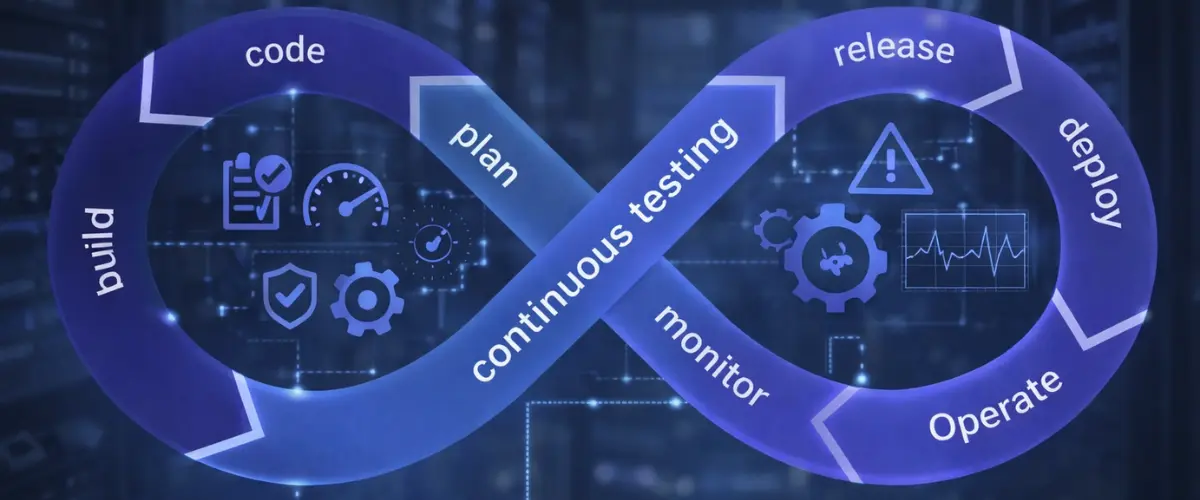
Continuous performance validation addresses these limitations by assessing system stability at multiple stages of development. Instead of conducting testing only before deployment, teams integrate continuous performance testing into CI/CD workflows, so every code change undergoes performance verification. This shift allows teams to detect issues earlier and correct them before they escalate.
Several factors contribute to production instability when structured testing practices are missing:
1. Infrastructure Constraints Under High Traffic
Applications often function well in development environments but behave differently under real traffic conditions. Without comprehensive load testing services, organizations cannot measure how servers, databases, and APIs respond when thousands of users access the system simultaneously.
Key issues include:
- Resource Saturation: CPU, memory, or network bandwidth may reach capacity limits during traffic surges.
- Thread or Connection Exhaustion: Backend services may fail when request queues grow beyond acceptable limits.
- Slow Database Queries: Large datasets may cause query delays that cascade across services.
These challenges highlight why performance testing services must simulate realistic workloads before deployment.
2. Lack of Visibility into Application Architecture
Complex application architectures include microservices, APIs, caching layers, and distributed databases. Each component interacts with others, and a bottleneck in one layer may degrade the entire system.
Organizations rely on advanced performance testing tools to monitor metrics such as response time, throughput, and error rates. These tools provide insights into which components struggle under load and how system dependencies affect performance.
3. Insufficient Capacity Planning
Scaling infrastructure without proper testing may result in either under-provisioning or unnecessary spending. This is where scalability testing services play a critical role. By gradually increasing workloads, teams determine how applications behave as user traffic grows.
Typical observations during scalability testing include:
- Linear or non-linear performance growth
- Infrastructure bottlenecks at specific user volumes
- Service degradation due to synchronization delays
These insights allow organizations to design capacity strategies based on measurable data.
4. Mobile Application Constraints
Mobile applications face additional performance challenges such as limited device memory, network latency, and varying operating systems. Without targeted mobile performance testing services, organizations risk releasing applications that perform poorly across different devices and connectivity conditions.
Key testing areas include:
- Performance across different mobile networks (3G, 4G, 5G, Wi-Fi)
- Battery consumption during heavy transactions
- Response time across device models
By combining load testing services with device-level analysis, organizations obtain a realistic picture of mobile application performance.
5. Limited Automation in Performance Testing
Manual testing cycles cannot keep pace with rapid release schedules. Organizations, therefore, adopt performance test automation to run performance validations automatically across builds. Automated scripts execute tests repeatedly, allowing teams to monitor performance trends over time.
A specialized performance testing company often implements automated pipelines that integrate testing frameworks with monitoring tools. This approach ensures that performance risks are detected early rather than after deployment.
Key Benefits of Continuous Performance Testing for Enterprise Systems
Continuous validation provides measurable operational and business benefits. By integrating testing into development pipelines, organizations gain visibility into application behavior long before production deployment. This structured approach prevents failures while supporting stable digital operations.
One of the most significant advantages is improved deployment assurance. When organizations perform repeated tests using advanced performance testing tools, they gain detailed insights into system response time, throughput, and error patterns. These insights help engineering teams refine infrastructure configurations and optimize application code.
Major Benefits of Continuous Performance Testing
1. Early Detection of Performance Bottlenecks
Testing applications across development stages helps teams detect inefficiencies before they reach production.
Key detection areas include:
- API latency and service delays
- Inefficient database queries
- Memory leaks in application processes
Through structured performance testing services, teams analyze these issues early and refine system performance accordingly.
2. Improved Infrastructure Stability
Enterprise systems often rely on distributed architectures and cloud infrastructure. Without structured testing, these systems may struggle during sudden traffic spikes.
Organizations, therefore, use scalability testing services to understand how systems behave as user demand increases. Testing results help infrastructure teams configure load balancers, caching layers, and database clusters more effectively.
Example Metrics Observed During Testing
Metric |
Purpose |
Outcome |
| Response Time | Measures application speed | Detect slow transactions |
| Throughput | Number of processed requests | Determine system capacity |
| Error Rate | Percentage of failed transactions | Identify stability issues |
Monitoring these metrics through advanced performance testing tools allows teams to address problems systematically.
3. Stronger Mobile User Experience
Mobile applications require careful optimization due to limited device resources and network variability. Through dedicated mobile performance testing services, organizations evaluate application behavior across device types, operating systems, and network conditions.
These tests help identify issues such as:
- Slow API responses on mobile networks
- Excessive data transfer
- High battery consumption
By resolving these issues early, organizations maintain consistent mobile experiences for end users.
4. Scalable Application Architecture
Rapid user growth often challenges system stability. With structured load testing services, organizations simulate high user traffic to verify how systems respond under stress.
Testing insights enable teams to:
- Identify scaling thresholds
- Improve service distribution strategies
- Optimize resource allocation
This approach supports stable expansion without compromising performance.
5. Long-Term Performance Optimization
Organizations increasingly implement enterprise performance testing programs that analyze performance trends over multiple releases. These programs allow teams to compare historical metrics and track system improvements over time.
A reliable performance testing company also delivers application performance testing services that combine workload simulation, monitoring, and analysis. Together, these capabilities help organizations maintain predictable system performance even as applications grow more complex.
Best Practices and Strategic Approaches for Continuous Performance Validation
Implementing continuous performance validation requires structured planning, appropriate tools, and integration with development workflows. Organizations that treat performance testing as a one-time activity often fail to detect emerging bottlenecks. Instead, performance evaluation should occur throughout the development lifecycle.
The following practices help organizations establish effective testing strategies.
1. Integrate Performance Testing Into CI/CD Pipelines
Testing should occur automatically whenever the application code changes. Automated pipelines run tests across development, staging, and pre-production environments.
Key advantages include:
- Immediate detection of performance degradation
- Continuous monitoring of system response times
- Faster feedback loops for development teams
A skilled performance testing company often integrates automated testing frameworks into delivery pipelines, ensuring consistent performance validation across releases.
2. Select the Right Performance Testing Tools
Accurate performance measurement depends on reliable performance testing tools capable of simulating realistic workloads.
Organizations should evaluate tools based on:
- Scalability of workload generation
- Integration with monitoring platforms
- Detailed reporting and analytics
These tools help engineers analyze resource consumption, transaction behavior, and service response times.
3. Combine Multiple Testing Approaches
Effective testing strategies use multiple validation techniques to examine system behavior under different conditions.
Key approaches include:
• Load Testing Services – Evaluate system performance under expected user traffic.
• Scalability Testing Services – Determine how systems respond as user demand gradually increases.
• Stress Testing – Identify the point at which systems fail or degrade.
Combining these techniques provides a comprehensive understanding of system limits.
4. Address Mobile Performance Early
Mobile systems introduce unique challenges due to diverse device capabilities and network conditions. Organizations should implement mobile performance testing services during early development stages.
Testing should examine:
- API latency across mobile networks
- Application start-up time
- Device resource usage
Early testing ensures that mobile users experience consistent performance regardless of device or network type.
5. Adopt Performance Engineering Practices
Beyond testing, organizations increasingly adopt performance engineering solutions that combine architecture analysis, system monitoring, and proactive optimization.
Performance engineering involves:
- Designing scalable system architecture
- Monitoring application performance metrics in real time
- Optimizing code and infrastructure before issues arise
This proactive approach shifts performance validation from reactive troubleshooting to continuous improvement.
6. Establish Clear Performance Benchmarks
Performance validation must rely on measurable benchmarks that define acceptable system behavior.
Typical benchmarks include:
- Maximum acceptable response time
- Minimum throughput levels
- Maximum error rate thresholds
Testing teams evaluate results against these benchmarks to determine whether systems meet performance requirements.
When organizations implement these best practices, performance testing services evolve into a continuous process rather than a single pre-release activity. This approach significantly reduces the risk of production failures.
ImpactQA provides scalable performance validation and infrastructure analysis to maintain stable releases
Challenges Organizations Face When Implementing Continuous Performance Testing
While continuous testing offers significant benefits, organizations often encounter practical challenges when attempting to implement it across large-scale systems. Many enterprises operate complex application environments with multiple services, databases, and cloud platforms. Integrating performance validation across such environments requires careful planning, specialized expertise, and appropriate infrastructure support.
One common challenge is the lack of realistic test environments. Production systems often operate on a distributed infrastructure that includes load balancers, microservices, and third-party integrations. Replicating this architecture in testing environments can be difficult. Without an environment that mirrors production conditions, test results may not accurately represent real system behavior. As a result, organizations rely on advanced performance testing tools capable of simulating distributed workloads and generating detailed monitoring insights.
Another difficulty involves managing large-scale workload simulations. Running performance tests that represent thousands or even millions of users requires substantial computing resources. This requirement becomes even more complex for organizations managing multiple applications simultaneously. In such scenarios, engaging a specialized performance testing company helps teams design efficient testing frameworks that balance cost and accuracy.
Data management also presents a challenge. Performance tests often require large volumes of test data to simulate realistic transactions. Preparing and maintaining this data across environments can be time-consuming. Structured application performance testing services address this issue by implementing automated data management strategies that maintain consistency across testing cycles.
Finally, organizations must align testing efforts with rapid development cycles. Continuous delivery pipelines introduce frequent code changes, and performance validation must keep pace with these updates. By integrating load testing services and scalability testing services into automated pipelines, enterprises ensure that performance risks are identified early without slowing development timelines.
Final Say
Production failures rarely occur without warning. In most cases, performance limitations exist long before deployment but remain undetected due to inadequate testing practices. Continuous validation allows organizations to identify infrastructure bottlenecks, inefficient code paths, and scalability constraints during development. By combining structured load testing services, scalability testing services, and mobile performance testing services, teams maintain application stability across high-traffic scenarios.
Partnering with an experienced provider such as enables organizations to implement structured testing frameworks and advanced performance testing tools. Our specialized performance testing services support enterprise systems through automated testing pipelines, infrastructure analysis, and workload simulation. Our experts help enterprises build resilient digital systems capable of handling complex workloads without production disruption.
Share this post


Related Posts
Our Case Studies