The Role of DevSecOps in Enhancing SAP System Security and Compliance

In an era where cyber threats are escalating at an unprecedented pace, businesses that rely on complex systems like SAP must ensure their security infrastructure is equally robust. SAP systems, pivotal in managing enterprise resources, are increasingly targeted by cybercriminals due to their critical role in business operations. According to a recent report by Statista, the global cost of cybercrime is estimated to reach $13.82 trillion by 2028 from $9.22 trillion in 2024. Thus, there is an implicit need for businesses operating SAP systems to constantly integrate and ensure compliance in security. This is where DevSecOps for SAP systems comes into play, addressing security challenges by embedding security practices into the software development lifecycle (SDLC) from the very beginning.
Understanding DevSecOps for SAP Systems
DevSecOps, short for Development, Security, and Operations, is a security approach that integrates security at every stage of the software development process. Traditionally, security was often added at the end of the software development lifecycle. However, this approach proved inefficient as vulnerabilities could go unnoticed until deployment, leaving systems susceptible to attack. With DevSecOps for SAP systems, security becomes a shared responsibility throughout the development process, ensuring vulnerabilities are detected and mitigated early on.
In an SAP context, DevSecOps is particularly beneficial because of the complexity and scale of SAP applications. SAP environments consist of multiple components, including databases, applications, and interfaces that often connect with external systems. These environments need continuous monitoring, and compliance checks to ensure they are protected against security breaches and comply with industry regulations such as GDPR, HIPAA, and others.
By integrating DevSecOps solutions for SAP, businesses can automate security processes and reduce the risk of human error. It can also enhance the speed of deployment without compromising security. The DevSecOps pipeline within SAP environments guarantees that security vulnerabilities are detected and addressed during development, testing, and production, leading to a more secure and compliant SAP system.
Role of DevSecOps in Enhancing SAP System Security
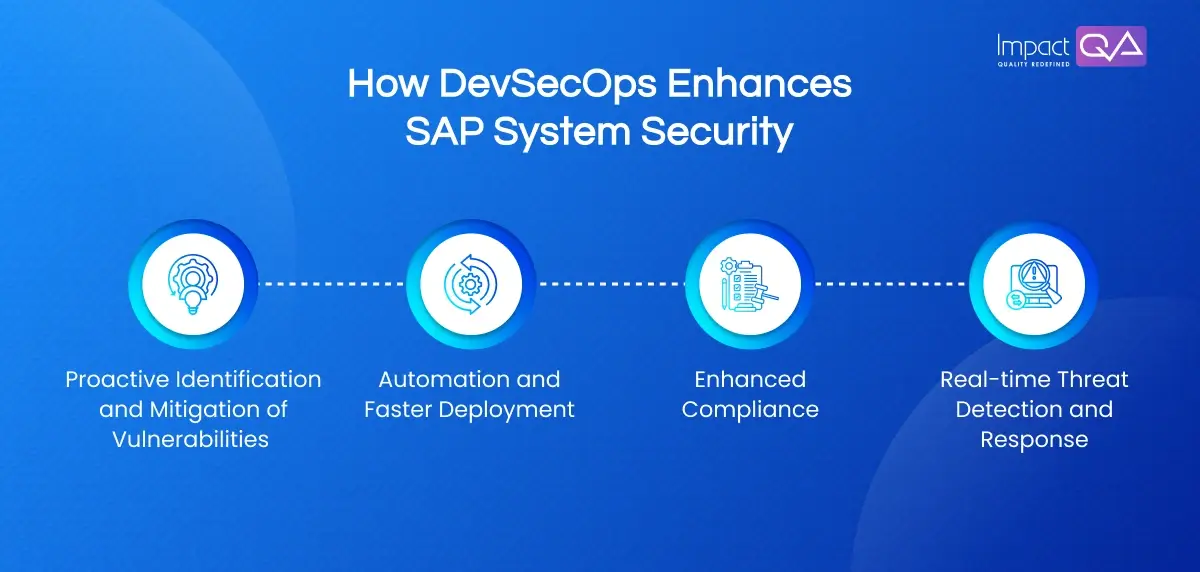
The primary goal of DevSecOps for SAP systems is to incorporate security seamlessly into the entire lifecycle of SAP application development.
Below are several ways in which DevSecOps solutions for SAP improve security:
1. Proactive Identification and Mitigation of Vulnerabilities
One of the key features of DevSecOps for SAP systems is its focus on proactively identifying and mitigating security vulnerabilities before they can be exploited. In traditional SAP environments, security testing often occurs after the development phase and, thus, allow vulnerabilities to go unnoticed until later stages. In the case of DevSecOps, security becomes synchronized in the process of delivery development itself. This allows developers to address issues as soon as they arise.
By utilizing tools such as static and dynamic application security testing (SAST and DAST), businesses can automate vulnerability detection in SAP applications and even in third-party components integrated with SAP. This proactive approach helps identify risks early, reducing the time between vulnerability discovery and resolution, and improving overall system security.
2. Automation and Faster Deployment
DevSecOps solutions for SAP allow businesses to automate security processes in their CI/CD pipeline, enabling quicker software releases without compromising on security. SAP environments often require frequent updates and patches, and DevSecOps streamlines this process by automating security testing at every stage.
This automation helps streamline the SAP security processes, ensuring that all the SAP systems remain secure while enabling companies to maintain the pace to meet market demands. With quicker deployment cycles, companies can push important security updates and patches faster, thus reducing their vulnerability exposure.
3. Enhanced Compliance
For businesses operating SAP systems in regulated industries, compliance with standards like GDPR, SOC 2, or PCI DSS is essential. DevSecOps integrates compliance checks within the SAP development pipeline to ensure that security controls align with legal and regulatory requirements. By incorporating compliance audits at every stage of development, businesses can ensure that their SAP systems remain compliant without the need for manual intervention.
Automating compliance checks within the DevSecOps pipeline also reduces the likelihood of human error and ensures that compliance requirements are continuously met as SAP systems evolve. This is especially important as regulations continue to evolve, and businesses must adapt their security measures accordingly.
4. Real-time Threat Detection and Response
Another critical benefit of DevSecOps for SAP systems is its ability to enable real-time threat detection and response. Traditional security measures in SAP systems often fail to detect threats until after the damage has been done. DevSecOps solutions, on the other hand, employ continuous monitoring of SAP environments, scanning for anomalies and potential threats in real-time.
Incorporating automated monitoring tools into the SAP infrastructure helps businesses detect and respond to security incidents faster, reducing the impact of any potential breaches. Real-time monitoring also allows businesses to adjust their security measures on the fly, thereby improving the overall level of security within their systems.
DevSecOps Implementation Challenges in SAP Environments
While DevSecOps for SAP systems offers numerous advantages, its implementation is not without challenges. Many organizations face difficulties in integrating DevSecOps principles within their SAP environments due to the complexity of these systems and the lack of skilled professionals in this specialized area.
1. Skillset Gap
One of the most significant challenges in implementing DevSecOps solutions for SAP is the lack of expertise in both SAP security and DevSecOps practices. SAP systems are highly specialized, and not all DevSecOps professionals are familiar with the intricacies of SAP environments. Ensuring that security practices are properly integrated into SAP systems requires a deep understanding of both SAP security architecture and DevSecOps methodologies.
2. Tool Integration
Integrating security tools into an existing SAP environment can be challenging due to compatibility issues between SAP components and third-party security tools. Businesses need to ensure that their security solutions work seamlessly with SAP applications, which may require extensive configuration and customization.
3. Balancing Security and Speed
SAP systems often require rapid updates and new feature deployments. Ensuring that DevSecOps for SAP systems does not slow down development cycles is essential for maintaining operational efficiency. Finding the balance between speed and security is an ongoing challenge for many organizations, but it is achievable with the right tools and processes in place.
Top Best Practices for Implementing DevSecOps for SAP Systems
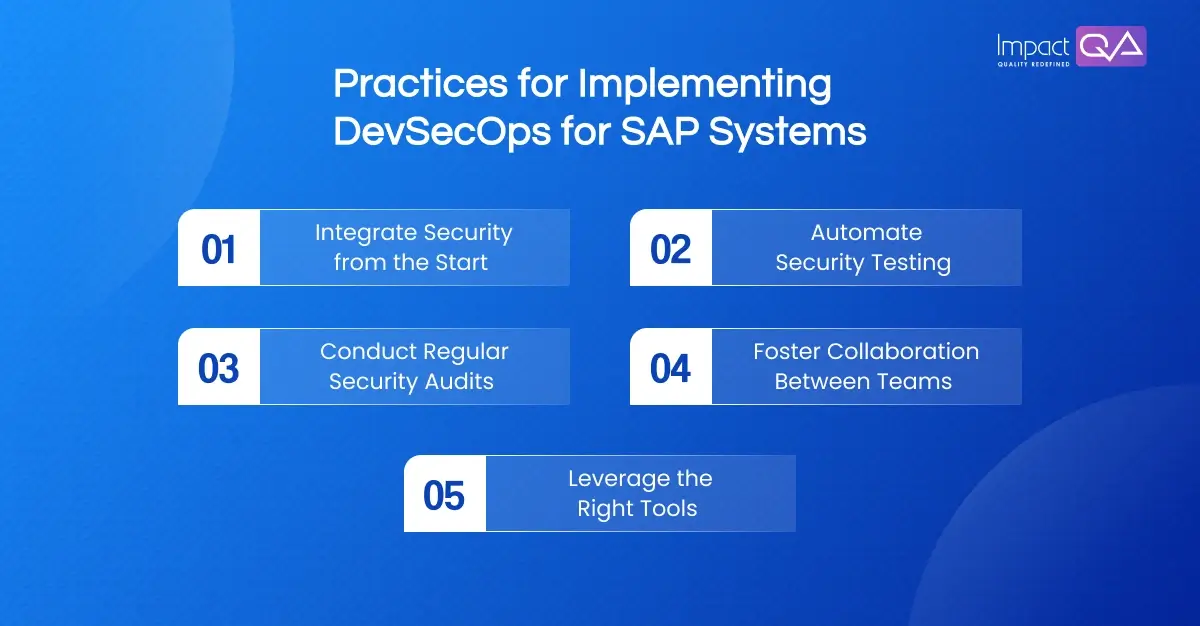
To make the most of DevSecOps solutions for SAP, businesses should adhere to best practices that help streamline implementation and maximize security. Below are the top practices to follow:
1. Integrate Security from the Start
Security should be embedded in every phase of the SAP development lifecycle, from design to deployment. This ensures that security vulnerabilities are detected early and addressed promptly.
2. Automate Security Testing
Automating security testing within the SAP CI/CD pipeline helps businesses reduce the time and effort needed for manual testing while ensuring vulnerabilities are quickly identified and resolved.
3. Conduct Regular Security Audits
The continuous auditing of SAP systems allows an organization to maintain compliance with industry standards and ensure that security practices are up to date with current threats.
4. Foster Collaboration Between Teams
DevSecOps is a collaborative approach that requires close cooperation between development, security, and operations teams. Encouraging communication and sharing responsibility for security can help businesses achieve their security goals.
5. Leverage the Right Tools
Using specialized DevSecOps tools tailored to SAP environments helps ensure that security is integrated effectively and consistently throughout the development process.
How ImpactQA Enhances SAP Security and Compliance
At ImpactQA, we understand the complexities involved in securing SAP systems and ensuring compliance with industry regulations. Our DevSecOps solution for SAP is designed to seamlessly integrate security measures into every stage of your SAP system’s development lifecycle. We offer a comprehensive suite of services, including security testing, vulnerability assessments, and compliance checks, to help businesses mitigate risks and achieve regulatory compliance.
By leveraging our expertise, businesses can enhance their SAP security posture without disrupting the development process. Our solutions help automate security workflows that allow your teams to focus on innovation while we ensure that your SAP systems are secure, compliant, and ready to meet the demands of today’s fast-paced digital world.
In conclusion, as the cyber threat landscape continues to evolve, integrating DevSecOps for SAP systems has become an integral part of every development by itself. Through ImpactQA‘s specialized solutions, this is made possible. Organizations can achieve a net increase in security and compliance, which also provides resilience for SAP environments in a very agile and explicitly digital world.
Share this post


Related Posts
Our Case Studies