Navigating Regulatory Challenges in Cloud-Based ETRM Implementations

The Energy Trading and Risk Management (ETRM) industry has seen a significant shift toward cloud-based solutions in recent years. With the energy markets evolving rapidly due to technological advancements, increased globalization, and stringent environmental regulations, companies are turning to cloud-based ETRM solutions to handle the complexities of modern energy trading and risk management. However, implementing these systems comes with its own set of regulatory challenges, particularly due to the sensitive nature of energy markets and data.
This article explores the regulatory complexities that organizations face when transitioning to cloud-based ETRM solutions and offers insights into how businesses can effectively navigate these challenges while ensuring compliance and maximizing operational efficiency.
The Growing Need for Cloud-Based ETRM Systems
For decades, on-premises ETRM systems have served as the foundation for energy trading firms. These systems provide essential functions like trade capture, risk assessment, and regulatory reporting. However, with the increasing complexity and volume of energy data, many companies have started to realize the limitations of their legacy systems. The cloud offers several advantages over on-premises solutions, including:

- Scalability: Cloud platforms allow companies to scale their operations up or down based on trading volumes, market conditions, or business requirements.
- Flexibility: Cloud-based ETRM solutions offer greater flexibility in terms of integrating with other business systems and technologies, such as AI/ML, and the Internet of Things (IoT) for real-time data analytics.
- Cost Efficiency: Cloud platforms operate on a subscription model, eliminating the need for hefty capital investments in IT infrastructure and allowing companies to pay for what they use.
- Security & Resilience: Cloud vendors continuously upgrade their platforms with the latest security protocols, often better than what many businesses can achieve in-house.
While the benefits of moving to the cloud are apparent, the path to successful implementation is full of regulatory obstacles, particularly in highly regulated industries like energy trading.
Understanding Regulatory Requirements
Energy markets are among the most regulated sectors globally. From the U.S. Federal Energy Regulatory Commission (FERC) to the European Union’s Markets in Financial Instruments Directive (MiFID II), various regulations govern energy trading and risk management practices. When moving ETRM systems to the cloud, companies must be vigilant about adhering to these regulations, as non-compliance can result in severe financial penalties and reputational damage.
Key Regulatory Bodies and Laws
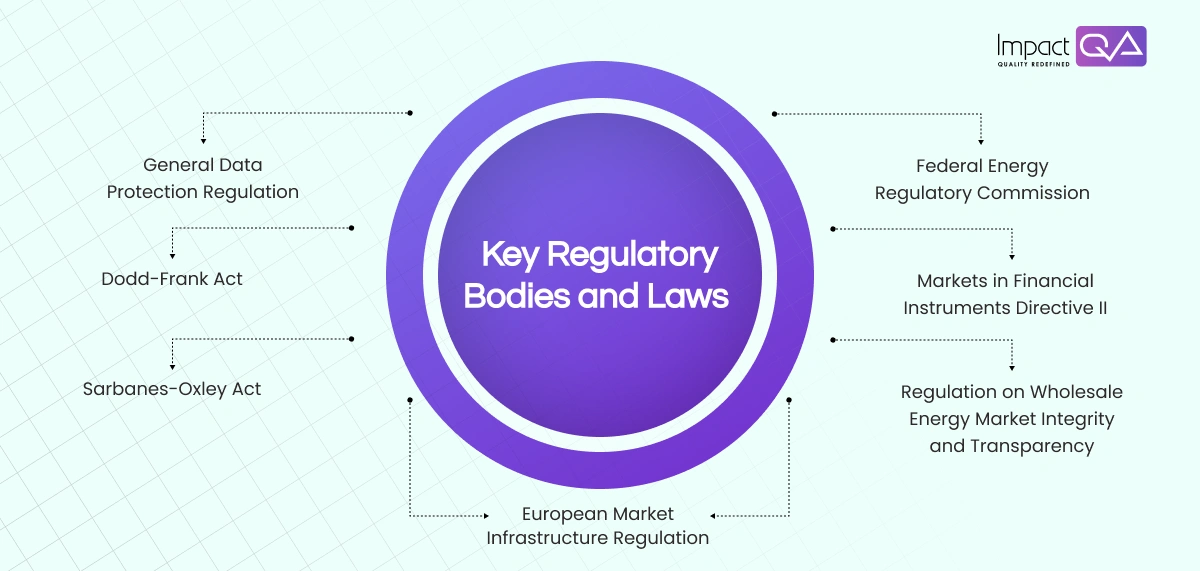
- FERC (Federal Energy Regulatory Commission): Governs wholesale electricity markets in the U.S. and sets the guidelines for how energy trades are managed and reported.
- MiFID II (Markets in Financial Instruments Directive II): Regulates financial markets across the European Union and emphasizes transparency and risk reporting.
- REMIT (Regulation on Wholesale Energy Market Integrity and Transparency): Aims to prevent market manipulation and insider trading in European energy markets.
- GDPR (General Data Protection Regulation): Focuses on data privacy and security, ensuring that customer and transactional data are handled responsibly.
- Dodd-Frank Act: Imposes regulations on over-the-counter (OTC) trading in the U.S., particularly focusing on trade reporting and clearing of derivatives.
- Sarbanes-Oxley Act (SOX): Although not exclusive to the energy sector, SOX ensures that your financial reports are transparent. Companies are required to maintain accurate, auditable records, safeguarding against any irregularities in their financial statements.
- European Market Infrastructure Regulation (EMIR): If you’re trading energy derivatives in Europe, EMIR requires you to clear your trades through central counterparties (CCPs) and report all details to a trade repository.
Each of these regulatory frameworks has its own set of data security, reporting, and auditing requirements. Cloud-based ETRM implementations must meet these standards, adding layers of complexity to the transition.
Data Sovereignty and Residency
One of the major concerns with cloud-based ETRM implementations is data sovereignty. Regulatory bodies often require companies to store data within the country where it is generated. This raises the issue of data residency, especially when dealing with global energy firms that operate in multiple jurisdictions. Cloud providers must be able to offer region-specific data centers to ensure compliance with local regulations. Neglecting to comply can lead to significant legal consequences and financial penalties.
Trade Reporting and Record Keeping
ETRM systems must facilitate the accurate reporting of trades to regulatory bodies in real-time. This is especially important under MiFID II and Dodd-Frank, which mandate transparency in trading activities. Cloud-based ETRM systems must ensure that they can handle large volumes of transactional data and produce accurate reports in compliance with these regulations.
In addition to trade reporting, regulations often require companies to retain records for several years. Cloud platforms need to ensure that historical trade data is securely stored and easily retrievable for audits.
Security and Compliance in Cloud-Based ETRM Systems
Security is one of the most significant concerns when moving ETRM systems to the cloud. Energy companies deal with vast amounts of sensitive data, including market forecasts, trade strategies, and financial information. Any breach of this data could lead to severe financial losses and damage a company’s reputation. Moreover, regulators mandate strict compliance with data security and privacy standards, making it imperative for businesses to choose a cloud platform that meets these requirements.
Cloud Security Best Practices
- Encryption: Cloud-based ETRM systems must encrypt data both in transit and at rest. This guarantees that, even if the data is intercepted, it cannot be read without the appropriate decryption keys.
- Multi-Factor Authentication (MFA): Implementing MFA adds an extra layer of protection, ensuring that only authorized personnel have access to sensitive data.
- Regular Audits and Penetration Testing: Cloud service providers should perform regular audits and penetration testing to identify potential vulnerabilities in the system.
- Compliance Certifications: Leading cloud providers typically adhere to industry standards such as ISO 27001, SOC 2, and GDPR compliance. Ensuring that your chosen cloud provider has these certifications is critical in maintaining compliance with regulatory bodies.
Vendor Due Diligence
When selecting a cloud provider, energy companies must conduct thorough due diligence to ensure that the vendor can meet regulatory requirements. Key areas to assess include:
- Data Residency: Does the vendor have data centers in the required regions to meet local data sovereignty laws?
- Compliance Capabilities: Is the vendor able to prove adherence to key regulations like MiFID II, Dodd-Frank, and GDPR?
- Service Level Agreements (SLAs): The SLA should clearly define the vendor’s responsibilities regarding security, uptime, and data integrity. This is essential for ensuring compliance and preventing possible legal conflicts.
- Exit Strategies: In case the partnership with the cloud provider needs to be terminated, companies should ensure that they have a clear exit strategy, including how data will be transferred securely and how long the provider will retain the data post-exit.
Overcoming Implementation Challenges
Beyond regulatory concerns, cloud-based ETRM implementations present several other challenges, including system integration, data migration, and change management.
System Integration
ETRM systems do not operate in isolation. They need to integrate with other business-critical systems such as ERP, CRM, and third-party trading platforms. Ensuring that the cloud-based ETRM system can seamlessly integrate with these platforms without causing disruptions to business operations is essential. This requires careful planning and coordination between internal IT teams, third-party vendors, and the cloud provider.
Data Migration
Migrating data from an on-premises ETRM system to the cloud is a complex process that involves transferring large volumes of sensitive data without losing integrity or accuracy. Companies must ensure that the migration process is well-planned and executed, with contingency plans in place to address any issues that may arise during the migration.
Change Management
Moving to a cloud-based ETRM system often requires changes to business processes and workflows. Employees must be trained to use the new system effectively and change management strategies should be implemented to ensure a smooth transition. Resistance to change is common, especially in industries like energy trading, where employees are used to legacy systems. Companies should focus on communication, training, and support to ease this transition.
Best Practices for Navigating Regulatory Challenges

While the regulatory landscape for cloud-based ETRM implementations may seem daunting, companies can successfully navigate these challenges by adopting the following best practices:
- Early Engagement with Regulators: Engage with regulatory bodies early in the implementation process to ensure that your cloud-based ETRM solution meets all necessary requirements. This can help avoid costly compliance issues down the line.
- Regular Compliance Audits: Conduct regular internal and external audits to ensure that the cloud platform and ETRM system remain compliant with evolving regulations.
- Continuous Monitoring: Implement monitoring tools that provide real-time insights into the system’s performance and compliance with regulatory requirements. This can assist in detecting potential problems before they grow into larger issues.
- Invest in Expertise: Companies should invest in hiring or consulting with experts in both cloud technology and regulatory compliance to ensure that they are meeting all requirements.
- Stay Informed: The regulatory landscape is constantly evolving. Companies must stay up to date with the latest regulations and ensure that their ETRM systems are updated accordingly.
Conclusion
In conclusion, as companies navigate the complexities of cloud-based ETRM implementations and regulatory requirements like EMIR, having the right partner is crucial for success.
ImpactQA offers comprehensive solutions to ensure a seamless transition to cloud-based ETRM systems while maintaining strict adherence to regulatory standards. From system integration to data security and continuous monitoring, our experts provide end-to-end support to help businesses stay compliant with global regulations. By leveraging ImpactQA’s expertise in quality assurance, companies can confidently focus on their core trading operations, knowing their systems and processes are optimized and secure.
Share this post


Related Posts
Our Case Studies