Maximizing Value Through SAP Testing: Key Considerations for CIOs in a Digital Era

As the deadline for SAP ECC’s end of life in 2027 draws nearer, the urgency for organizations to migrate to SAP S/4HANA grows stronger. This transition is not just a technical upgrade but a complete overhaul that affects core business processes and operations. In the face of this significant change, CIOs are under immense pressure to ensure their SAP migration strategy is robust and effective. With numerous companies grappling with similar challenges, the risk of disruption is high, and the potential for value realization is significant but fraught with complexity.
Moreover, migration to S/4HANA is not just about shifting systems; it is about transforming the way businesses operate. From aligning business objectives with technological changes to engaging the right expertise, every decision counts. So, the question arises: how can CIOs navigate these factors and maximize the value of their SAP investments?
This blog provides a comprehensive look into key considerations that CIOs should keep in mind to maximize value through SAP testing. Drawing from industry studies and expert insights, we’ll explore how to navigate the complexities of SAP migration effectively.
Aligning SAP Migration with Business Objectives
The first step in any successful SAP migration is aligning the project with broader business goals. This alignment ensures that the migration supports strategic objectives rather than becoming a standalone IT initiative.

Understanding the Business Impact
Migration to SAP S/4HANA involves more than a simple software upgrade; it requires a reassessment of business processes and functions. CIOs should begin by determining how the new systems will support the organizational goals of greater productivity, improved decision-making, and better customer experience. This level of clarity ensures that the technical changes deliver real business value.

Building a Strong Business Case
Highlight how S/4HANA will deliver tangible benefits, such as cost savings, improved performance, or enhanced capabilities. Demonstrating these benefits in clear, measurable terms can help maintain support throughout the migration process. The business case should focus on outcomes that align with both the short-term and long-term goals of the organization.
Engaging Stakeholders Early
It is essential to involve key stakeholders from across the organization when determining a Cloud Migration strategy and plan. This includes not only IT but also finance, operations, and other relevant departments. Early engagement helps align the migration with business needs and secures buy-in from all levels of the organization. Cross-functional teams ensure that the migration delivers company-wide value, beyond just IT improvements.
Setting Clear Objectives and KPIs
Establish clear success criteria and the metrics by which it will be measured. These metrics will guide the migration process and help in evaluating its success. This also keeps all parties accountable and provides a framework to adjust strategies when necessary.
Choosing the Right Migration Approach
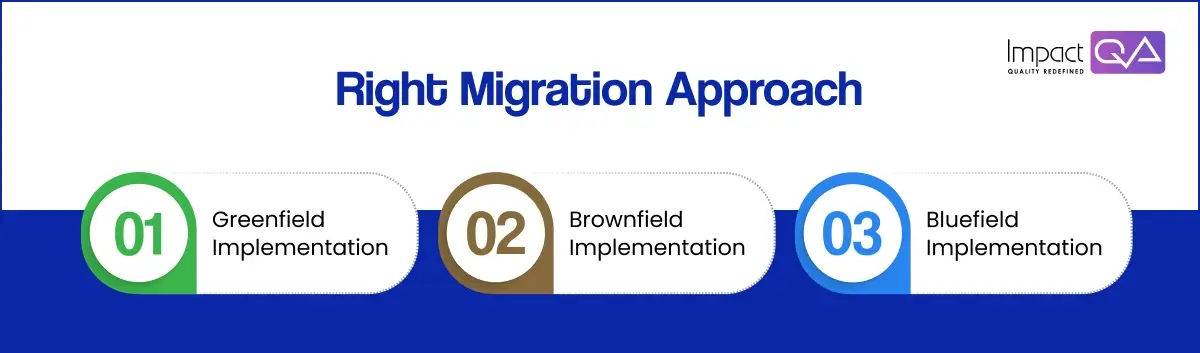
Selecting the appropriate migration approach – greenfield, brownfield, or bluefield can significantly influence the success of the project. Every approach comes with its own benefits and challenges.
Greenfield Implementation
A greenfield approach involves starting from scratch with a new system setup. This approach provides a fresh start, allowing organizations to adopt best practices without legacy constraints. However, it requires substantial effort and resources, and organizations need to be prepared for potential disruptions during the transition. It is most suitable for companies that want to completely reimagine their processes.
Brownfield Implementation
The brownfield approach involves transferring existing configurations and customizations to the new system. This method can be less disruptive and preserve existing investments but may carry over inefficiencies and outdated practices. It is essential to evaluate which elements are worth migrating to and which should be re-engineered to align with current business needs.
Bluefield Implementation
The bluefield approach integrates aspects of both greenfield and brownfield strategies. Organizations can migrate core processes while retaining certain legacy customizations. This hybrid model offers flexibility but requires careful planning to balance old and new elements effectively. The bluefield approach helps organizations move forward without discarding valuable legacy investments entirely.
Leveraging Expertise and Best Practices
Given the complexity of SAP migrations, relying on external expertise can be highly beneficial. However, it’s essential to choose the right partners and methodologies.
Choosing the Right Partners
Engage with experienced SAP consultants and vendors who have a proven track record. They offer valuable insights and help navigate the technical challenges of the migration. Ensure that these partners are well-versed in both the technical and business aspects of SAP S/4HANA. Vendors who can offer end-to-end support from planning to post-migration optimization are essential for a successful transition.
Data-Driven Insights
Traditional methods of process mapping can be subjective and incomplete. To gain a comprehensive understanding of your processes, leverage advanced tools that offer data-driven insights. These tools can provide a clearer picture of how changes will impact your operations and help in making informed decisions. Predictive analytics and real-time data monitoring tools can further refine decision-making during the migration process.
Best Practices for Migration
Adhering to industry best practices is one of the keys to successful migration. Best practices typically include concentrating on core processes, limiting customizations, and performing extensive testing. Having best practices to follow can help ensure that a migration is not delayed and that doesn’t result in unanticipated costs from downtime or other disruptions.
Continuous Improvement
Continuous improvement should be embedded in the migration process. Regularly review and refine processes based on feedback and performance data to ensure ongoing effectiveness and efficiency. This approach not only helps in immediate gains post-migration but also builds a culture of ongoing optimization for future upgrades or system enhancements.
Why SAP Migrations Demand Specialized External Support
Migrating to SAP S/4HANA is a complex process that demands a deep understanding of both the SAP environment and its alignment with the organization’s overall strategy. Most companies lack the internal resources and expertise to handle such a complex transformation effectively. This is where specialized software and QA testing companies like ImpactQA come into play.
Reason You Need External Testing Partners
While some organizations may try to manage their SAP migration independently, most find that they need external support to ensure a seamless and successful transition. Testing, in particular, requires a highly skilled team that understands both the business processes and the technology involved. ImpactQA, with its comprehensive testing services, ensures that all functionalities of the SAP system are verified and optimized.
Ensuring System Integrity
ImpactQA provides rigorous testing solutions that verify system performance, security, and data integrity throughout the migration. From functional testing that ensures business processes operate as intended, to performance testing that ensures the system can handle high volumes of transactions, a professional testing team is vital. It is the key to catching errors early before they snowball into costly business disruptions.
Reducing Business Risks
An external QA testing partner mitigates the risk of operational failures during and after migration. Companies like ImpactQA provide an extra layer of assurance that mission-critical systems continue to function smoothly. By catching potential issues early in the migration process, organizations can avoid costly downtime, data loss, and other risks that could derail business operations.
Effective Testing for Successful Migration
Testing is a critical component of any SAP migration strategy. Effective testing ensures that the new system meets business requirements and performs as expected.
Comprehensive Testing Strategies
A comprehensive testing strategy that covers functional, performance, and integration testing is necessary for ensuring a smooth migration. Functional testing ensures that all business processes work correctly in the new system. Performance testing verifies that the system performs well under various conditions, while integration testing ensures seamless interaction with other systems.
Data Migration Testing
Data migration is an essential aspect of the migration process. Ensuring that data is accurately and completely transferred to the new system is vital. This involves validating data integrity and consistency to prevent issues that could impact business operations. Failing to properly test data migration can result in system errors and business inefficiencies.
Continuous Validation
Testing should be an ongoing process rather than a one-time task. Implementing continuous validation throughout the migration helps identify and address issues promptly. This approach helps in maintaining system reliability and performance, even as business requirements evolve.
User Acceptance Testing (UAT)
Conduct User Acceptance Testing (UAT) to ensure that the system meets end-user needs and expectations. UAT helps identify issues from a user perspective and ensures that the system is ready for full deployment. Proper UAT also plays a key role in promoting higher adoption rates post-migration.
Re-engineering Processes for Future Growth
Migrating to S/4HANA offers an opportunity to re-engineer and optimize business processes. Use this chance to improve efficiency and effectiveness.
Evaluating and Optimizing Processes
Analyzing current processes to identify areas for improvement is critical. Consider adopting best practice models and eliminating outdated or redundant processes. This evaluation helps in optimizing workflows and ensuring that the new system supports future growth.
Integrating Advanced Capabilities
S/4HANA offers advanced features, including real-time data processing and improved analytics. Leveraging these features can provide deeper insights and improve business performance. Integrating advanced capabilities helps organizations adapt to future business needs more effectively.
Managing Change
Implementing new processes and technologies necessitates effective change management. It’s important to ensure that employees receive training and support during the transition. Effective change management ensures that new systems are adopted widely, reducing resistance and increasing operational efficiency.
Scalability and Future-Proofing
Plan for scalability and future-proofing your processes. Ensure that the new system can adapt to future business needs and technological advancements.
Conclusion
The migration to SAP S/4HANA is a complex but necessary step for organizations aiming to remain competitive in today’s fast-paced digital environment. By aligning business objectives, choosing the right migration approach, leveraging expertise, and focusing on thorough testing, CIOs can maximize the value of their SAP investments. Testing companies like ImpactQA play an essential role in ensuring that these migrations occur smoothly, reducing risks, and optimizing system performance for long-term success.
Share this post


Related Posts
Our Case Studies