Key Benefits of Optimizing CTRM Solutions for Oil and Gas Companies Through Advanced QA Techniques

Quick Summary:
Optimizing CTRM solutions is essential for oil and gas companies to manage complex market conditions. By integrating advanced QA techniques like Test-Driven Development (TDD) and Behavior-Driven Development (BDD), organizations can enhance system performance, reliability, and security. These methodologies help ensure CTRM systems are efficient, adaptable, and aligned with business needs. This blog explores the key benefits of this optimization and provides an in-depth look at how adopting modern QA strategies can shape the future of oil and gas trading operations.
Table of Contents:
- What is CTRM and Why is Optimization Important?
- The Role of Advanced QA Techniques in Optimizing CTRM Solutions
- TDD vs BDD: Which QA Approach is Best for CTRM Solutions?
- The Key Benefits of Optimizing CTRM Solutions for Oil and Gas Companies
- Challenges in Optimizing CTRM Solutions and How to Overcome Them
- ImpactQA’s Approach to CTRM Solutions and Their Services
- Final Say
In the oil and gas sector, maintaining robust and efficient Commodity Trading and Risk Management (CTRM) solutions is crucial for staying competitive. However, these systems often encounter challenges such as market volatility and the increasing complexity of trading operations. To ensure that CTRM solutions can handle these complexities while adapting to evolving industry needs, organizations must optimize their systems.
The key to this optimization lies in adopting advanced QA techniques like Test-Driven Development (TDD) and Behavior-Driven Development (BDD). These methodologies not only streamline CTRM solutions but also enhance their reliability, speed, and adaptability.
ImpactQA provides customized solutions to enhance system reliability.
What is CTRM and Why is Optimization Important?
Commodity Trading and Risk Management (CTRM) solutions are software platforms designed to support the trading, risk assessment, and financial management of commodities, particularly in industries like oil and gas. These platforms help businesses monitor the entire lifecycle of commodities, from procurement to sales, and manage the financial and operational risks involved.
The oil and gas sector, in particular, faces a range of challenges like fluctuating prices, regulatory changes, geopolitical tensions, and complex supply chains. Optimizing CTRM solutions is critical for ensuring that trading and risk management functions operate smoothly. Without optimization, companies risk inefficiency, errors, and poor decision-making, which can lead to significant financial losses.
Moreover, with new regulations and technologies shaping the industry, CTRM systems must be able to adapt quickly to changing environments. Continuous optimization ensures these systems remain effective, accurate, and efficient in the face of these pressures.
The Role of Advanced QA Techniques in Optimizing CTRM Solutions
Quality Assurance is central to maintaining the functionality, reliability, and security of CTRM systems. Advanced QA techniques like Test-Driven Development (TDD) and Behavior-Driven Development (BDD) play an essential role in the optimization process.
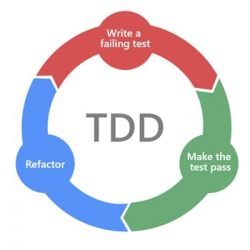
- Test-Driven Development (TDD): In TDD, tests are written before the code itself to ensure that all code is created with a specific purpose in mind and that it functions correctly from the start. This approach can help identify and eliminate bugs early in the development process, thus reducing errors and improving the overall stability of CTRM solutions.
- Behavior-Driven Development (BDD): BDD focuses on collaboration between developers, testers, and business stakeholders to ensure that the software behaves as expected. This technique helps teams align the development of CTRM solutions with business requirements and user expectations. By incorporating real-world behavior into the development process, BDD reduces the likelihood of misalignment between the system’s functionality and user needs.
Together, TDD and BDD can ensure that CTRM solutions are robust, reliable, and aligned with the specific needs of oil and gas companies.
TDD vs BDD: Which QA Approach is Best for CTRM Solutions?
Sr. No. |
Feature |
TDD (Test-Driven Development) |
BDD (Behavior-Driven Development) |
| 1. | Focus | Ensuring code correctness and functionality | Defining expected system behavior from a business perspective. |
| 2. | Primary Goal | Write code that passes tests | Align development with business needs and user expectations. |
| 3. | Collaboration | Primarily developer-driven | Collaborative process involving developers, testers, and business stakeholders. |
| 4. | Test Creation | Tests written first, before code | Scenarios written in plain language to describe behavior. |
| 5. | Best For | Ensuring functional correctness in code | Communicating business requirements clearly and improving system usability. |
| 6 | Example | Test functions, methods, and units | Write scenarios like “Given a user is logged in, when they perform an action, then the system should respond as expected” |
Both TDD and BDD are valuable QA techniques, but they differ in approach and focus. To help you determine which one is more suitable for optimizing CTRM solutions in the oil and gas sector, let’s compare them side by side:
For CTRM solutions, TDD is effective for ensuring the core system functionalities work seamlessly. On the other hand, BDD is beneficial for ensuring that the system’s behavior aligns with the business goals and real-world scenarios, making it a more user-friendly solution.
The Key Benefits of Optimizing CTRM Solutions for Oil and Gas Companies
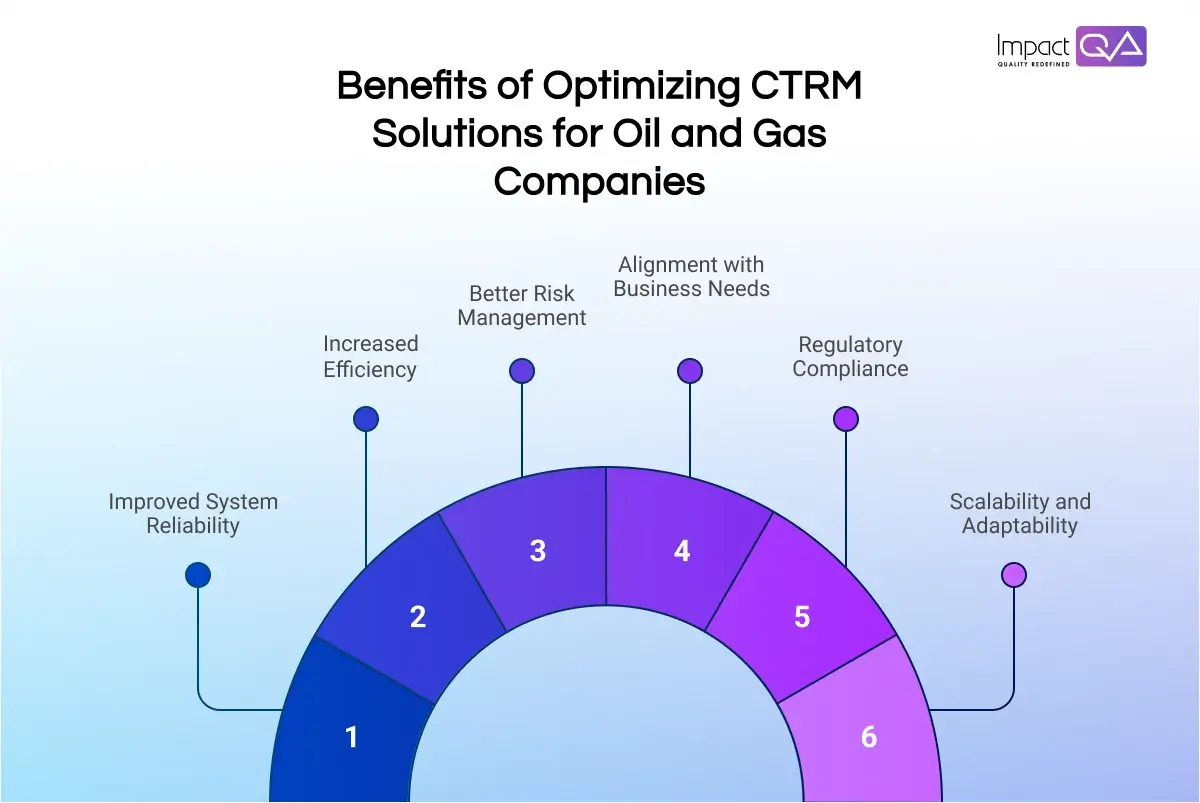
Optimizing CTRM solutions through advanced QA techniques provides several key benefits that directly impact the performance of oil and gas companies:
Improved System Reliability: By leveraging TDD, companies ensure that their CTRM solutions are free of errors from the start. This leads to a more stable and dependable system that can handle the complexities of commodity trading and risk management.
Increased Efficiency: Automated testing processes in TDD and BDD reduce the time spent on manual testing and debugging. This allows development teams to focus on more strategic tasks. As a result, businesses can bring new features and improvements to the market faster, which is crucial in the fast-paced oil and gas industry.
Better Risk Management: CTRM solutions are critical for managing financial and operational risks. Optimized systems provide more accurate forecasts, better monitoring of market conditions, and improved decision-making capabilities. This helps companies to navigate riskier situations more effectively.
Alignment with Business Needs: BDD ensures that CTRM solutions are built to meet the specific needs of the oil and gas sector. This improves system usability, aligns the software with business requirements, and ensures the solution delivers value to the organization.
Regulatory Compliance: The oil and gas industry is highly regulated. Advanced QA techniques help ensure that CTRM systems are compliant with the latest industry standards and reduce the risk of non-compliance fines and penalties.
Scalability and Adaptability: As oil and gas markets evolve, companies must adapt their CTRM systems to handle new commodities, trading strategies, and regulatory changes. Optimizing CTRM solutions with TDD and BDD makes it easier to scale and adjust systems to meet new demands.
Challenges in Optimizing CTRM Solutions and How to Overcome Them
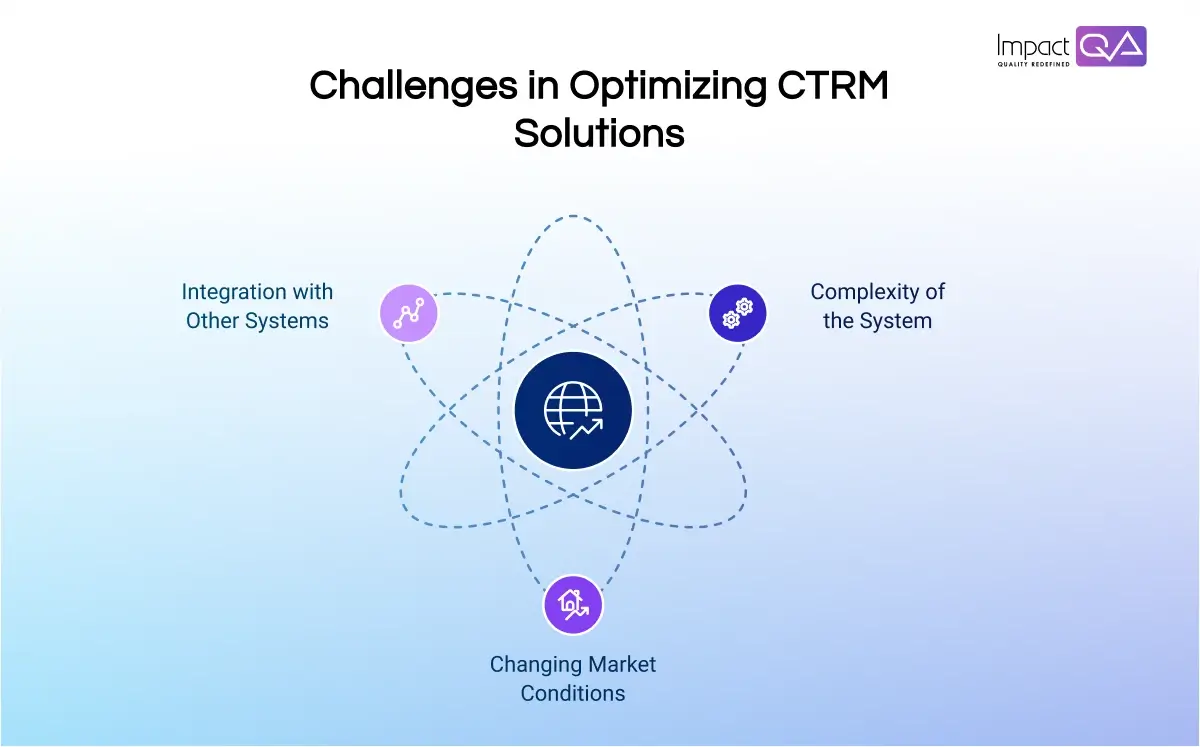
Despite the many benefits, optimizing CTRM solutions is not without its challenges:
Complexity of the System: CTRM solutions are often large and complex, integrating various components like trading, risk management, and reporting. Ensuring that every part of the system is optimized and tested thoroughly can be time-consuming and challenging.
Changing Market Conditions: The volatility of the oil and gas market means that CTRM solutions must be flexible enough to adapt to new pricing models, trading instruments, and regulations. Continuous optimization is necessary to keep the system relevant.
Integration with Other Systems: CTRM solutions often need to integrate with other enterprise systems like ERP (Enterprise Resource Planning) and ETRM (Energy Trading and Risk Management) solutions. Ensuring smooth integration requires rigorous testing and optimization.
How to Overcome These Challenges:
Agile Development: Using agile development practices ensures that optimization is an ongoing process rather than a one-time event. This allows for continuous improvements and quick adaptation to new market conditions.
Automated Testing: Implementing automated testing tools for both TDD and BDD can help reduce testing time and make the process more efficient. This can ensure quick identification and resolution of issues.
ImpactQA’s Approach to CTRM Solutions and Their Services
ImpactQA offers a wide range of services designed to optimize CTRM solutions for oil and gas companies. Our expertise in test automation, test management, and performance testing ensures that your CTRM system is scalable, secure, and capable of meeting market demands.
With advanced QA techniques, ImpactQA helps organizations integrate TDD and BDD practices into their development processes, ensuring that all aspects of the CTRM solution are optimized. Our deep understanding of the oil and gas industry enables us to offer tailored solutions that address the specific challenges faced by commodity traders and risk managers.
You can explore ImpactQA’s services in more detail on the CTRM Solutions page.
ImpactQA delivers tailored solutions for improved reliability and reduced risk.
Final Say
The advancement of CTRM solutions for the oil and gas industry will depend on continuing to optimize and integrate advanced QA techniques such as TDD and BDD. These techniques are not only meant to enhance system reliability but also make the software responsive to the constantly changing needs of the industry. When oil and gas companies engage in these types of practices, they are able to streamline their business, lessen risk, and provide better decision supported capabilities.
As the industry faces increasing complexity and volatility, leveraging optimized CTRM solutions will be a key factor in staying competitive. With the expertise of ImpactQA and our tailored services, companies can ensure that their CTRM systems remain efficient, adaptive, and aligned with their business goals.
Share this post


Related Posts
Our Case Studies