How CTRM Software Solutions Streamline Commodity Trading and Risk Management
Quick Summary:
Commodity markets are complex, global, and susceptible to risks that demand advanced technology. CTRM software solutions provide centralized visibility, automation, and control to help firms manage trading, compliance, and risk efficiently. With CTRM cloud solutions, companies achieve faster settlements, reduced errors, and sharper insights. This blog explores how CTRM software companies reshape modern trading through practical impact and real-world examples.
Table of Contents:
- The Rising Importance of CTRM in Global Commodities
- Understanding the Foundation: What is CTRM Software?
- Transformation Through CTRM Implementation and Cloud-Driven Efficiency
- Why CTRM Software Companies Are Shaping Global Trade
- Advancements in Next-Gen CTRM Software
- The Specific Edge of a CTRM RightAngle Solution
- Real-World Impacts & Metrics of Commodity Trading and Risk Management CTRM Software
- Conclusion
The Rising Importance of CTRM in Global Commodities
Commodity trading has grown into a bourgeoning sector, driven by fluctuating global supply chains, price volatility, and regulatory frameworks. Firms dealing with energy, agriculture, or metals face challenges of real-time decision-making, operational transparency, and compliance. These complexities demand digital-first tools that allow traders to process vast datasets and assess risks before they impact margins.
CTRM software solutions have become indispensable in providing transparency across the trade lifecycle. They integrate diverse activities, such as trading, logistics, risk assessment, and compliance, into one platform. This shift eliminates dependency on spreadsheets or manual reconciliations, which are highly susceptible to errors. By embracing such systems, organizations ensure reduced risk, faster transactions, and scalable operations in a market where time and accuracy are everything.
See how ImpactQA’s expert services can simplify implementation and compliance.
Understanding the Foundation: What is CTRM Software?
Before exploring the broader benefits, it is essential to define what is CTRM software. It stands for Commodity Trading and Risk Management, encompassing digital platforms that unify front, middle, and back-office operations in trading organizations.
Key capabilities include:
- Trade Capture: Recording trade transactions with accuracy in real time.
- Risk Management: Monitoring exposure across markets, credit, and liquidity.
- Logistics: Managing shipments, warehousing, and delivery schedules.
- Financial Management: Integrating accounting, settlements, and reporting.
The global commodity sector is susceptible to currency fluctuations, geopolitical events, and supply chain disruptions. This is where Next-Gen CTRM Software comes in – moving beyond simple data capture to predictive analytics and scenario simulations. Such systems give traders the power to run stress tests and evaluate what a sudden price swing or a shipping disruption might mean for their portfolio.
Moreover, specialized solutions like a CTRM RightAngle solution have carved a niche by providing highly configurable tools that adapt to energy trading, ensuring compliance and profitability.
Transformation Through CTRM Implementation and Cloud-Driven Efficiency
To illustrate how organizations benefit, it is essential to look at transformation outcomes when deploying CTRM Implementation and modern CTRM cloud solutions. These systems are not just replacements for spreadsheets but active enablers of speed, accuracy, and operational discipline.
Example Outcomes
- Accelerated Settlements: Post-implementation, some firms reduce settlement times from 72 hours to under six. This helps to improve liquidity and lower capital lockups.
- Reduced Manual Errors: Firms relying on fragmented systems earlier spent large sums reconciling data. After CTRM deployment, error rates typically fall by over 70%, cutting both operational costs and compliance exposure.
- Higher Productivity per Trader: With integrated dashboards and automated alerts, traders can manage portfolios two to three times larger without expanding headcount.
- Smarter Risk Buffering: Real-time monitoring reduces the need for excess capital cushions, directly impacting profitability by lowering collateral requirements.
- Regulatory Compliance Gains: Automated reporting modules for EMIR, Dodd-Frank, and REMIT reduce reporting cycles from days to hours, saving cost and effort.
A consolidated commodity trading and risk management CTRM software architecture ensures these improvements are not temporary gains but systemic efficiencies. Moreover, cloud-based setups scale elastically, adapt to peak trading loads, and deliver upgrades without heavy IT overhead. This convergence of implementation discipline and cloud deployment explains why CTRM software companies increasingly focus on offering modular, cloud-native platforms.
Why CTRM Software Companies Are Shaping Global Trade
The influence of CTRM Software Companies extends far beyond providing technical tools. They shape how the global commodity market functions, bringing consistency and transparency across regions.
How They Shape Markets:
- Standardizing Valuations: Pricing models embedded in CTRM platforms create a baseline consensus in markets.
- Influencing Hedging Strategies: Through real-time simulations, traders refine their positions and buffer strategies.
- Creating Vendor Ecosystems: Some vendors allow third-party plugins, expanding functionalities and user communities.
- Driving Data-Driven Cultures: Commodity trading decisions shift from instinct to analytics.
Additionally, Next-Gen CTRM Software providers are embedding AI-driven tools and predictive modules that detect anomalies and market risks faster than manual oversight.
For energy and metals, firms increasingly prefer specialized systems like a CTRM RightAngle solution to meet regulatory and operational nuances. This trend highlights the expanding role vendors play in setting industry standards.
Advancements in Next-Gen CTRM Software
The rise of Next-Gen CTRM Software has transformed trading into a predictive, data-driven function. Unlike legacy systems that captured data passively, new-age platforms actively interpret, simulate, and guide decision-making.
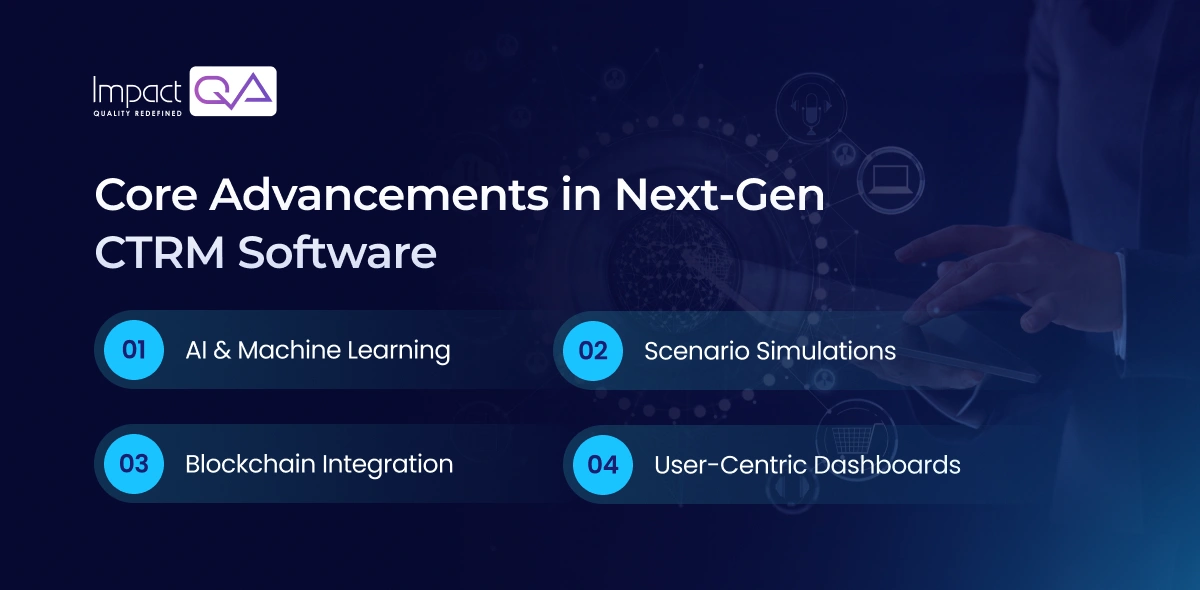
Core Advancements:
- AI & Machine Learning: Pattern recognition for price forecasting and anomaly detection.
- Scenario Simulations: Modeling shocks like geopolitical conflicts or supply chain disruptions.
- Blockchain Integration: Enhancing transaction transparency and traceability.
- User-Centric Dashboards: Empowering traders with real-time, intuitive views.
At the same time, specific modules such as a CTRM RightAngle solution add niche capabilities for energy companies, supporting structured deals and pipeline management.
What sets these innovations apart is their ability to combine compliance, risk management, and logistics into a single user interface. As markets grow more volatile, such comprehensive systems ensure firms remain resilient while pursuing growth.
The Specific Edge of a CTRM RightAngle Solution
Among specialized CTRM systems, the CTRM RightAngle solution holds unique value, especially for energy traders. It focuses on structured deals, regulatory compliance, and operational efficiency.
Features That Distinguish RightAngle:
- Integration of scheduling and logistics with trading data.
- Automated settlement and accounting workflows.
- Detailed risk exposure dashboards for energy commodities.
- Compliance reporting for regional mandates.
For firms dealing in oil, gas, or electricity, RightAngle systems go beyond generic commodity trading and risk management CTRM software. They tailor workflows to sector-specific needs, eliminating inefficiencies that arise when generic solutions are applied to specialized markets.
The adoption of such platforms represents how CTRM software solutions are diversifying, addressing not only broad needs but also vertical-specific requirements.
Real-World Impacts & Metrics of Commodity Trading and Risk Management CTRM Software
To illustrate concretely how CTRM firms influence commodity markets, here are a few categories of real-world impact, accompanied by metrics or examples.
Example Impacts
- Faster Trade-to-Settlement Cycles: After implementing a CTRM platform, some trading firms report settlement cycle times dropping from days to hours or minutes. This accelerates cash flow and reduces working capital burdens.
- Reduced Reconciliation and Manual Error Costs: Firms formerly spending large operations teams reconciling multiple spreadsheets now use central logic; they often see error rates fall by 70–80%.
- Better Risk Visibility Leading to Lower Capital Buffers: With real-time exposure dashboards, trading firms reduce “unknown tail exposures” and thus need less capital buffer or collateral cushion.
- Higher Throughput Per Trader: Traders using integrated dashboards, analytics, and alerts can manage a larger portfolio without proportional headcount growth.
- Regulatory Reporting Efficiency: Automatic report generation for EMIR, Dodd-Frank, REMIT, etc., cuts compliance costs and error exposure.
Sample Metrics Before vs After CTRM Implementation
Metric / KPI |
Before CTRM |
After CTRM |
Impact of Improvement |
| Trade reconciliation error rate | ~1–2% | <0.2% | Fewer losses, fewer investigations |
| Time to value trade (settlement) | 48–72 hours | 4–6 hours | Liquidity improves, faster decisions |
| Number of trades per trader | 50/day | 120/day | Productivity more than doubled |
| Compliance reporting time | 3 full man-days | <8 hours | Lower cost, lower regulatory risk |
| Capital buffer requirement | 10–15% portfolio | 7–10% | Lower capital cost |
These metrics demonstrate how CTRM Software Companies deliver quantifiable improvements. In the energy sector, E/CTRM providers also influence pricing dynamics. Because participants adopt similar valuation logic, arbitrage margins and risk premiums often align closely. The embedded logic for discounting, transportation, and carry costs establishes a baseline pricing consensus.
Moreover, traders now expect systems to support simulations and stress testing. Next-Gen CTRM Software allows users to model disruptions like sudden price drops or new regulatory rules and instantly evaluate portfolio exposure. This capability redefines hedge design and risk allocation strategies.
Finally, differentiation among vendors shapes entire ecosystems. Clients increasingly demand modular upgrades, data openness, and third-party integration. Vendors that support such extensions encourage ecosystems of user-driven tools around their core platforms.
Discover how ImpactQA helps businesses achieve faster settlements, reduced errors, and smarter risk management.
Conclusion
The adoption of CTRM cloud solutions is not just about operational efficiency but about future-proofing trading organizations. Firms that embrace this transformation gain resilience, agility, and confidence in navigating global commodity challenges. Moreover, the integration of commodity trading and risk management CTRM software with AI and predictive models is redefining how risks and opportunities are assessed.
This is where service providers like ImpactQA become instrumental. Our expertise lies in delivering tailored CTRM Implementation and testing solutions that ensure seamless performance, regulatory compliance, and scalability. ImpactQA’s Next-Gen AI assistant, NeX-AI, leverages automated test generation and customized testing for platforms like Openlink, RightAngle, Allegro, and SAP CM, minimizing quality risks and accelerating delivery timelines. With a consultative approach, we enable businesses to derive maximum value from their CTRM investments, aligning technology with growth and ensuring long-term success in a dynamic market.
Share this post


Related Posts
Our Case Studies